What Is Agentic AI in Supply Chain
Agentic AI refers to AI systems designed to operate with a degree of autonomy. These systems use advanced models, real-time data, and predefined goals to make decisions and execute actions without constant human oversight. By 2030, 50% of cross-functional supply chain management solutions are expected to use intelligent agents to autonomously execute decisions. Backed by $113B+ in ecosystem investment, the data layer is where AI value begins and where autonomous supply chains are being built.
Many supply chains today still operate within structures built for human-led decision-making, where processes are sequential, visibility is limited, and actions depend on manual coordination. Agentic AI introduces a fundamentally different model. These intelligent systems can interpret context, interact with multiple data sources, and operate across workflows with a high degree of autonomy. Equipped to reason, plan, and execute, they function as active participants within the supply chain rather than passive analytical tools. As a result, organizations can begin to reimagine how decisions are made and how operations are orchestrated across an increasingly complex ecosystem.
Types of AI Agents
AI agents can be categorized based on how they operate and make decisions. Understanding these types helps organizations apply them effectively across different use cases.
Reactive vs. Proactive Agents: Reactive agents respond instantly to inputs or changes in their environment. They follow predefined logic or learned patterns to take immediate action, making them useful for real-time interactions. Proactive agents, however, go a step further by identifying trends and anticipating future needs. They initiate actions in advance, helping improve planning and overall efficiency.
Autonomous vs. Assisted Agents: Autonomous agents operate independently, making decisions and executing tasks without human involvement. They are best suited for environments that require speed, scale, and continuous operation. Assisted, or semi-autonomous, agents work alongside humans by providing insights and recommendations. They enhance decision-making while allowing human oversight where needed.
Specialized Agents: Some AI agents are designed for specific business functions or industries. These agents address targeted challenges, such as detecting anomalies in financial transactions, predicting equipment issues in manufacturing, or analyzing patterns in operational data. Their focused design enables more precise and impactful outcomes.
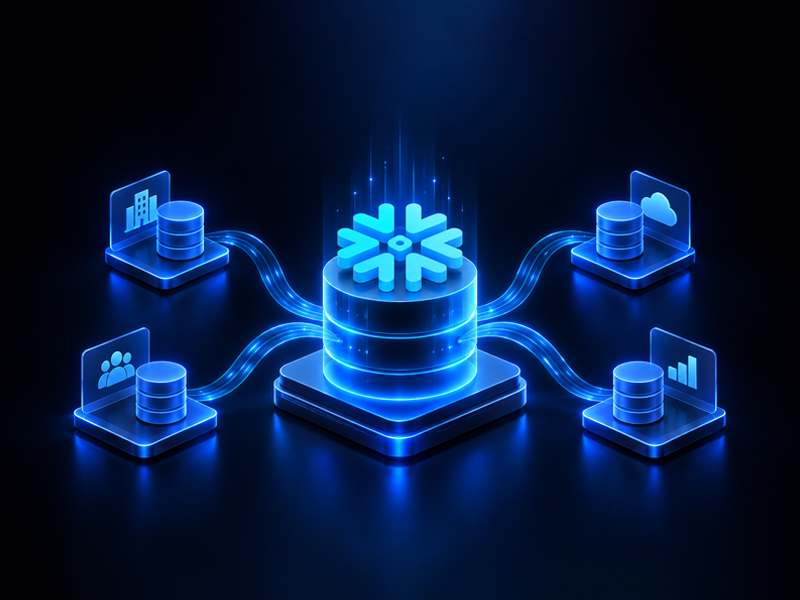
Snowflake as the Foundation for Agentic AI
|
Traditional Challenge |
Snowflake Advantage |
|
Fragmented data across ERP, logistics, and external systems |
Unifies all data into a single, governed platform |
|
Limited access to real-time, high-quality data for AI models |
Enables seamless access to live, trusted data at scale |
|
Difficulty collaborating across supply chain partners |
Supports secure data sharing across suppliers, distributors, and partners |
|
Performance constraints when processing large data volumes |
Delivers scalable compute to run AI models efficiently in real time |
Why leading enterprises are doubling down on data infrastructure before deploying agentic systems
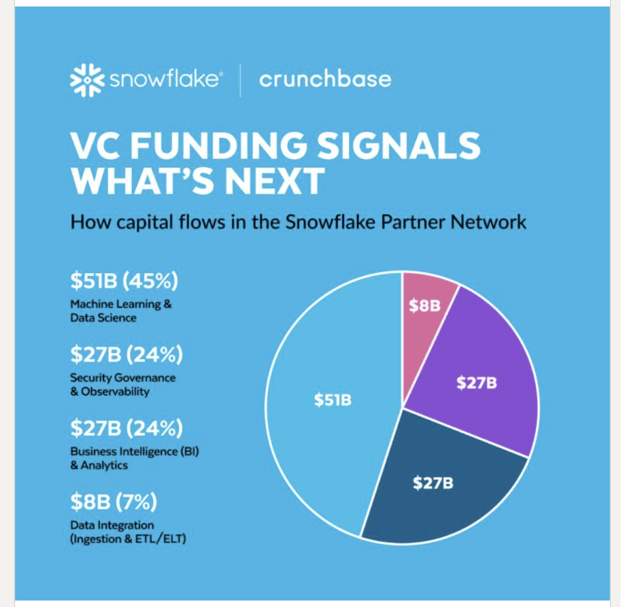
The shift toward agentic AI is not just a technology trend. It is increasingly backed by market conviction. A joint analysis by Snowflake and Crunchbase tracking over $113 billion in funding across the Snowflake ecosystem reveals a clear signal: capital is consolidating partners who solve the "last mile" of data activation.
While 2021 marked a broad boom in AI investment, 2025 tells a more focused story. Of the $25.5 billion that flowed into the ecosystem last year, the majority went to a high-conviction set of companies turning well-governed data into immediate, business-ready outcomes. Organizations that invest in a strong data foundation are better positioned to deploy AI that executes, not just analyzes.
For supply chain leaders, this reinforces a critical principle: before autonomous agents can optimize inventory, reroute shipments, or flag supplier risks, they need a unified, trusted, and scalable data environment to operate from. Snowflake's AI Data Cloud provides exactly that foundation, making it the logical starting point for any enterprise agentic AI strategy.
From Insights to Autonomous Execution: How It Works
Agentic AI systems operate through a combination of data ingestion, model inference, and action orchestration. The process begins with continuous data collection from internal and external sources. This data includes demand signals, inventory levels, supplier performance, and market conditions.
|
Step |
What Happens |
Business Impact |
|
Step 1: Data Ingestion |
Continuous data flows from ERP, logistics systems, suppliers, and external signals |
Creates a real-time, unified view of the supply chain |
|
Step 2: AI Analysis |
Models detect patterns, anomalies, and potential disruptions |
Enables early identification of risks and opportunities |
|
Step 3: Decision Intelligence |
System evaluates options based on goals, constraints, and policies |
Recommends the most optimal course of action |
|
Step 4: Autonomous Execution |
Workflows trigger actions such as inventory adjustments or rerouting shipments |
Reduces manual effort and accelerates response time |
|
Step 5: Continuous Learning |
Feedback loops refine models based on outcomes and performance |
Improves accuracy and decision quality over time |
Key Benefits of Agentic AI in Supply Chains
Autonomous Decision-Making at Scale: AI agents move beyond analysis to independently plan and execute actions, reducing reliance on manual intervention and accelerating response times.
Continuous, Real-Time Intelligence: Agents ingest and process data from multiple sources in real time, enabling faster, more informed decisions in dynamic supply chain environments.
End-to-End Process Automation: Unlike traditional automation, agentic systems handle multi-step workflows, from identifying issues to executing resolutions across supply chain functions.
Improved Efficiency and Productivity: By automating repetitive tasks and optimizing workflows, organizations can focus on strategic initiatives while improving overall performance.
Adaptive and Self-Improving Systems: Agentic AI continuously learns from outcomes, refining decisions and improving performance over time to handle evolving supply chain complexities.
Key Supply Chain Use Cases
Demand Planning and Forecasting: Enables more accurate and dynamic forecasts by continuously incorporating real-time demand signals and market changes. This reduces stockouts, minimizes excess inventory, and improves alignment between supply and demand across the network.
Inventory Optimization: Maintains optimal inventory levels across warehouses and distribution centers by automatically adjusting replenishment strategies. This lowers carrying costs, improves inventory turnover, and ensures the right products are available at the right time.
Logistics and Transportation Optimization: Optimizes routing and carrier selection in real time based on disruptions, demand shifts, and capacity constraints. This reduces transportation costs, improves delivery speed, and enhances on-time performance and customer satisfaction.
Supplier Risk Management: Continuously monitors supplier performance and external risk signals to identify potential disruptions early. This enables proactive mitigation strategies, improves supplier reliability, and strengthens overall supply chain resilience.
Enabling Autonomous Supply Chains With KPI Partners
We enable enterprises to move from AI experimentation to real-world execution by building scalable, AI-ready data foundation on Snowflake. With a strong focus on unifying fragmented data, KPI Partners creates a trusted environment where intelligent systems can operate with speed and accuracy.
By combining modern data architecture with embedded intelligence, it connects insights directly to action. This approach ensures that organizations are not just generating analytics but operationalizing them through agentic systems that are scalable, governed, and aligned to business goals. By prioritizing data quality and accessibility, KPI Partners lays out the foundation for autonomous decision-making across the supply chain.