


by Naresh Meda
What Is A Level-Based Measure?
A level-based measure is a column whose values are always calculated to a specific level of...

by Naresh Meda
What Is A Level-Based Measure?
A level-based measure is a column whose values are always calculated to a specific level of aggregation. Here is an example of a level-based measure using a Products and Revenue table. A level-based hierarchy is created for Products as follows:
By default, when we drill down within the products hierarchy from Brand level to Product level, the corresponding Revenue drills down to Product level.

by Avinash Mohan
Exploring the different ways Tableau connects to data and whether dimensional modeling is necessary when using Tableau’s...
by Avinash Mohan
Exploring the different ways Tableau connects to data and whether dimensional modeling is necessary when using Tableau’s architecture.
Architecture
Tableau has two primary ways to connect to data sources and work with them as shown in this simplified architecture diagram shown below .

by Madan Thota
Endeca Information Discovery (EID) is a data discovery tool that helps business analysts to rapidly explore relevant data....
by Madan Thota
Endeca Information Discovery (EID) is a data discovery tool that helps business analysts to rapidly explore relevant data. If you are already using Oracle Business Intelligence Enterprise Edition (OBIEE) and wish to reuse the BI data models from Endeca Information Discovery, here are the options. The primary difference between both tools is that one is used for pre-defined analytics while the other is used for having a conversation with your data (analytics vs information discovery). The overall goal for both approaches is to get the most value out of the data available.
by Kumar Krishnaswamy
A quick Google search for “Tableau Data Security” returns a link to a Tableau knowledge base article for User...
by Kumar Krishnaswamy
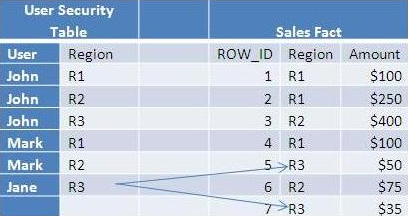
A quick Google search for “Tableau Data Security” returns a link to a Tableau knowledge base article for User Filters and Row Level Security. The knowledge base article clearly lays out the options available for implementing data security – defined as the ability to control what data a user sees. The goal here is to not regurgitate that content, but to examine each of the two data security options laid out by Tableau and determine how they fit various use cases in the enterprise context.


by Naresh Meda
What Is A Level-Based Measure?
A level-based measure is a column whose values are always calculated to a specific level of aggregation. Here is an example of a level-based measure using a Products and Revenue table. A level-based hierarchy is created for Products as follows:
By default, when we drill down within the products hierarchy from Brand level to Product level, the corresponding Revenue drills down to Product level.
by Avinash Mohan
Exploring the different ways Tableau connects to data and whether dimensional modeling is necessary when using Tableau’s architecture.
Architecture
Tableau has two primary ways to connect to data sources and work with them as shown in this simplified architecture diagram shown below .
by Madan Thota
Endeca Information Discovery (EID) is a data discovery tool that helps business analysts to rapidly explore relevant data. If you are already using Oracle Business Intelligence Enterprise Edition (OBIEE) and wish to reuse the BI data models from Endeca Information Discovery, here are the options. The primary difference between both tools is that one is used for pre-defined analytics while the other is used for having a conversation with your data (analytics vs information discovery). The overall goal for both approaches is to get the most value out of the data available.
by Kumar Krishnaswamy
A quick Google search for “Tableau Data Security” returns a link to a Tableau knowledge base article for User Filters and Row Level Security. The knowledge base article clearly lays out the options available for implementing data security – defined as the ability to control what data a user sees. The goal here is to not regurgitate that content, but to examine each of the two data security options laid out by Tableau and determine how they fit various use cases in the enterprise context.
