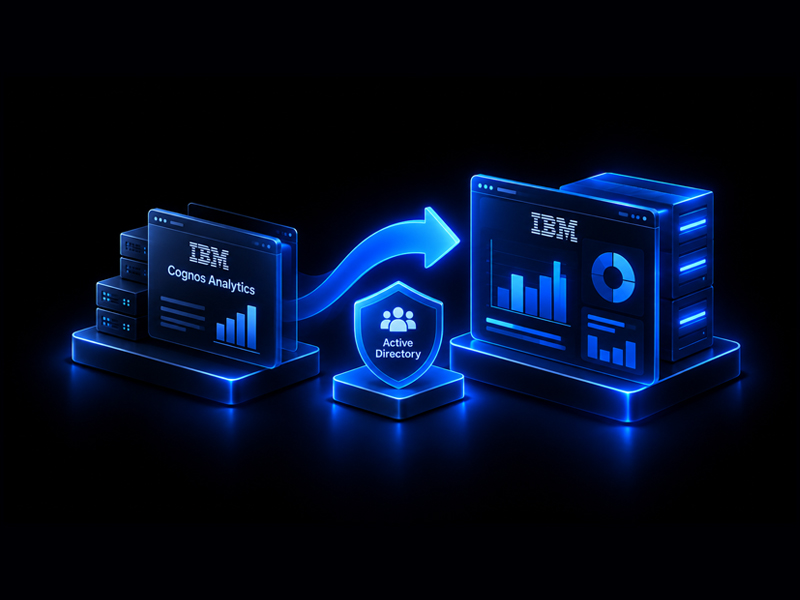
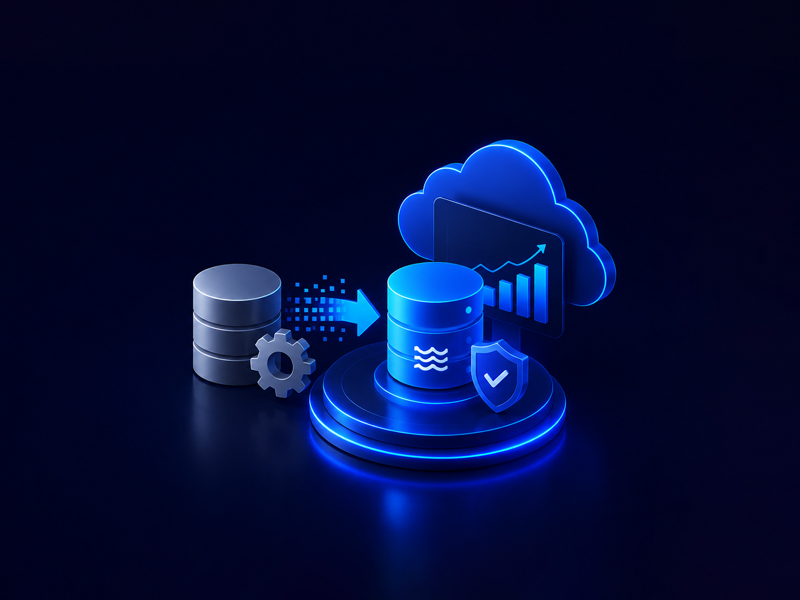
A U.S.-based global manufacturing enterprise modernized its legacy Informatica PowerCenter environment using KPI Partners Informatica-to-Databricks Migration Utility, part of the Data Platform Migration Accelerator in the KPI DataBridge Suite.
The transformation delivered faster analytics, reduced operating costs, and a scalable Databricks Lakehouse foundation built for AI-driven innovation and long-term performance.
Download the full case study to explore the complete Informatica to Databricks modernization roadmap, automation benchmarks, and business outcomes.
Project Overview: Modernizing Data Pipelines for the Cloud-Native Era
As Informatica environments age, modernization becomes critical for enterprises aiming to accelerate insights, control costs, and eliminate legacy dependencies.
The client, a U.S.-based global manufacturer, faced high ETL maintenance costs, performance bottlenecks in large-scale batch processing, and limited scalability for real-time analytics. They needed a faster, automated way to migrate complex Informatica workloads to Databricks while ensuring data accuracy, governance, and compliance.
KPI Partners addressed these challenges using a purpose-built, GenAI-powered Informatica-to-Databricks Migration Utility. The solution automated mapping conversion, applied validation frameworks to maintain functional parity, and established a unified Databricks Lakehouse for analytics and AI.
Through this automation-driven approach, KPI Partners helped the client transition from a rigid ETL setup to a cloud-native, governed, and high-performance data environment, achieving speed, accuracy, and scalability for the future.
Key Results Achieved with KPI Partners
KPI Partners delivers Informatica to Databricks migration outcomes that are measurable, outcome-driven, and aligned with real business impact. Here are some of the highlights from this transformation:
| Metric | Outcome |
| 10× Faster Performance | Delivered through cloud-native, distributed Databricks pipelines optimized for scale and speed. |
| 42% Faster Development Cycles | Enabled by reusable frameworks, version-controlled workflows, and CI/CD automation. |
| 50% Better Operational Productivity | Through unified monitoring, automated restarts, and reduced manual intervention. |
| 90% Automation Achieved | Using KPI’s Informatica-to-Databricks Migration Utility for mapping conversion and validation. |
Note: For detailed business impact and quantified results, refer to the full case study.
Why Download This Case Study
This isn’t just a story about one enterprise; it’s a modernization roadmap for organizations planning or evaluating an Informatica to Databricks migration.
Here’s what you’ll get inside the full case study PDF:
- Step-by-step modernization roadmap: from assessment to migration and validation.
- Real-world benchmarks: automation rate, performance gains, and TCO impact.
- Common Informatica modernization challenges: and how KPI’s migration utility solves them.
- Practical insights: on accelerating delivery through streamlined automation and DevOps.
- A blueprint: for building a future-ready, cloud-native Databricks Lakehouse.
If you’re exploring Informatica modernization or planning to migrate workloads to Databricks, this case study provides practical insights and proven outcomes from a real manufacturing transformation.
Comments
Comments not added yet!