-
Workload map across stay, serve, and convert
-
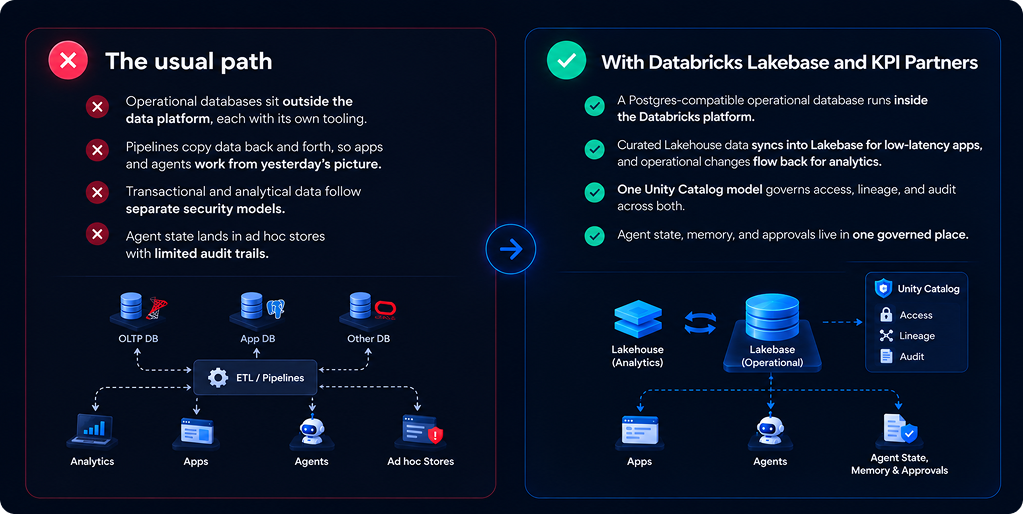
Target architecture on the Lakehouse and Lakebase
-
Prioritized release plan
possible
One Governed Platform for Transactions, Analytics, and AI
KPI Partners helps enterprises bring operational data, analytics, and AI agents together on Databricks Lakebase, so live data reaches the apps and agents that act on it, governed by Unity Catalog from day one.
Databricks Silver Partner, Migrate & Modernize Specialized

What Databricks Lakebase Changes for Each Team

Operational Data Is the Next Step
for Enterprise AI
Many enterprises have already modernized analytics on the Lakehouse. The transactional side
often still lives in separate databases, linked by sync pipelines that add cost and delay. As AI
moves from answering questions to taking action, closing that gap becomes the opportunity.

Three Ways to Put Databricks
Lakebase to Work
Start from where your estate is today, from any source system. Each
entry point delivers value on its own and builds toward the next.
Real-Time Data for Apps and APIs
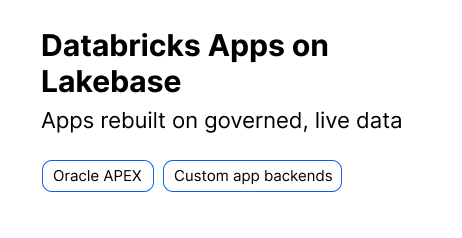
Serve curated, governed Lakehouse data to the apps and application programming interfaces (APIs) your teams and customers use every day, without building another copy.
Operational Database Modernization
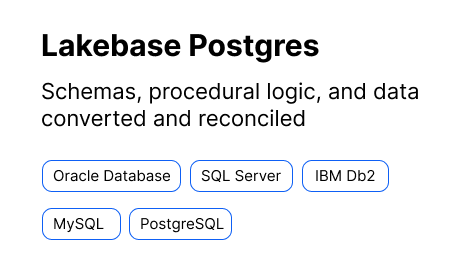
Move legacy online transaction processing (OLTP) databases, custom application databases, and integration stores onto Lakebase, with schemas and procedural logic converted and every table reconciled.
AI Agents That Remember and Act
Give agents fast reads of live data, stateful memory in Lakebase, and a governed path to write approved actions back to your systems of record, with people in control.
How We Engage
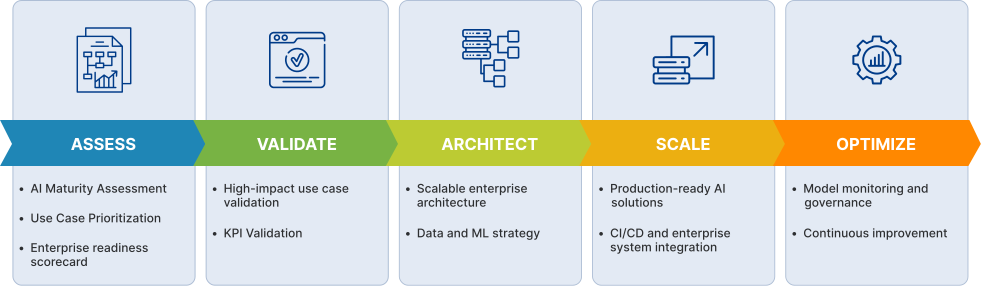
Each engagement has a defined scope and outcome, so
you can start small, prove value, and scale on evidence.
-
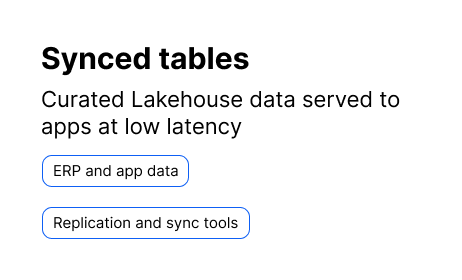
Synced tables serving live, governed data
-
A Databricks App or API in production
-
Database branches for safe testing
-
Generative AI (GenAI) assisted schema and code conversion
-
Table-level reconciliation with our Data Quality Validator
-
Legacy database decommissioning plan
-
Monitoring, alerting, and incident response
-
Compute and cost optimization
-
New apps, agents, and sources onboarded
Moving to Lakebase from the Systems You Run Today
We work from any source. We map each workload to its Lakebase pattern, convert what needs converting, and reconcile the results before cutover.
Built to De-Risk Your Lakebase Journey
Lakebase-Ready Architecture
Patterns that unify transactional and analytical workloads, designed for real-time insight and AI at scale.
Proven Modernization Discipline
Our Data Platform Migration Accelerator brings GenAI-powered conversion and automated validation, proven across Oracle, Informatica, and other enterprise estates moving to Databricks.
AI-Ready Operational Data
Governed data models that give apps and agents trusted business context, not raw tables. IQ Foundry brings domain agents for procurement, supply chain, HR, sales, and finance, and its SalesIQ agent already runs on Lakebase.
Governance-First Execution
A certified Databricks partner, validated through real customer migrations


Impact across industries
Common Questions About Databricks Lakebase
What is Databricks Lakebase?
Lakebase is a fully managed, serverless Postgres database built into the Databricks platform. It handles low-latency transactional work such as application state, agent memory, and operational records, scales automatically with demand and down to zero when idle, and is generally available on AWS and Azure.
How is Lakebase different from the Lakehouse?
The Lakehouse holds governed history for analytics and AI. Lakebase serves live, low-latency reads and writes for apps and agents. Synced tables bring curated Lakehouse data into Lakebase, and operational changes can flow back for analytics, all under Unity Catalog.
Do we have to replace our ERP or existing databases?
No. Systems of record such as your ERP stay in place. We classify each workload as stay, serve from Lakebase, or convert, and most organizations start with one app, database, or agent before expanding in waves.
Which databases can move to Lakebase?
Any source. Because Lakebase is built on standard Postgres, most existing drivers and tools work with minimal changes. We convert schemas and procedural logic from sources such as Oracle Database, SQL Server, IBM Db2, and MySQL, then reconcile every table before cutover.
How does Lakebase support AI agents?
Agents keep state, memory, and approvals in Lakebase, right next to the governed data they reason over. Lakebase supports pgvector for embeddings, and approved actions can be written back to your systems of record with people in control.
How do teams test changes without risking production?
Lakebase creates instant, zero-copy branches of production data in seconds, so teams can test and develop against real data safely, with point-in-time recovery if something goes wrong.
Ready to Put Databricks
Lakebase to Work?
Whether you are planning your first real-time app, modernizing operational databases, or giving AI agents a governed memory, KPI Partners will help you find the right starting point.
Success Stories
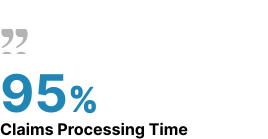
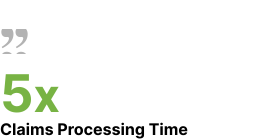
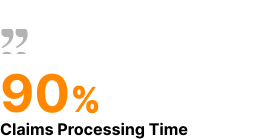
Reduced claims turnaround using AI-driven workflow automation, improving speed and consistency across operations.
![]()
Global Financial Services Leader
Enabled self-service access to ERP and analytics using governed GenAI, reducing IT dependency and improving decision speed.
![]()
Leading U.S. Beverage Manufacturer
Improved reliability through predictive intelligence and root-cause analysis embedded into operational workflows.
![]()
Global Manufacturing Leader
Data Platform Migration for Modern Analytics
KPI DataBridge Suite is designed to help enterprises modernize their data and analytics infrastructure across:
BI Modernization 🔗
Data Platform Migration 🔗
Data Products 🔗