Corporate spin-offs are usually planned around legal, financial, and operational milestones. New entities are formed. ERP and CRM systems are selected. Timelines are set. Teams prepare for Day 1 independence.
But one question often gets less attention until it becomes urgent:
How will leaders run the business while the data foundation is still changing?
During a spin-off, the business cannot pause while systems are being implemented. Finance still needs reporting. Operations still need visibility. Quality and manufacturing teams still need reliable data. Executives still need to make decisions with confidence.
That is where many organizations run into an analytics gap.
This is the exact situation a global pharmaceutical Contract Development and Manufacturing Organization (CDMO) found itself in after being spun off from its parent company. It’s also a useful lens for any executive facing a similar transition, whether through a spin-off, merger, acquisition, or large-scale ERP replacement, where systems, data ownership, and reporting definitions are changing at the same time.
The Business Reality: Independence Doesn't Wait for Analytics to Be Ready
In many transformations, analytics is treated as something that comes later.
1. First, the new ERP goes live.
2. Then, the CRM stabilizes.
3. Then, teams begin building reports.
4. Then, the data warehouse project starts.
That sequence may look logical on a project plan, but it creates a real business risk. The business may be legally or operationally independent before it is analytically ready to operate that way.
For several months, leaders may have to rely on manual reports, disconnected spreadsheets, partial system exports, or inconsistent KPI definitions. That creates problems at exactly the moment when the organization needs more visibility, not less.
For companies going through spin-offs, mergers, acquisitions, or ERP modernization, this can affect:
- Board and leadership reporting
- Financial close visibility
- Commercial pipeline tracking
- Manufacturing and supply chain oversight
- Audit and compliance readiness
- Historical trend analysis
- Post-merger or post-spin-off performance tracking
The issue is not whether reporting will eventually be available. The issue is whether the business can afford to wait.
The Legacy Question Nobody Likes to Ask: What Happens to the Old Data?
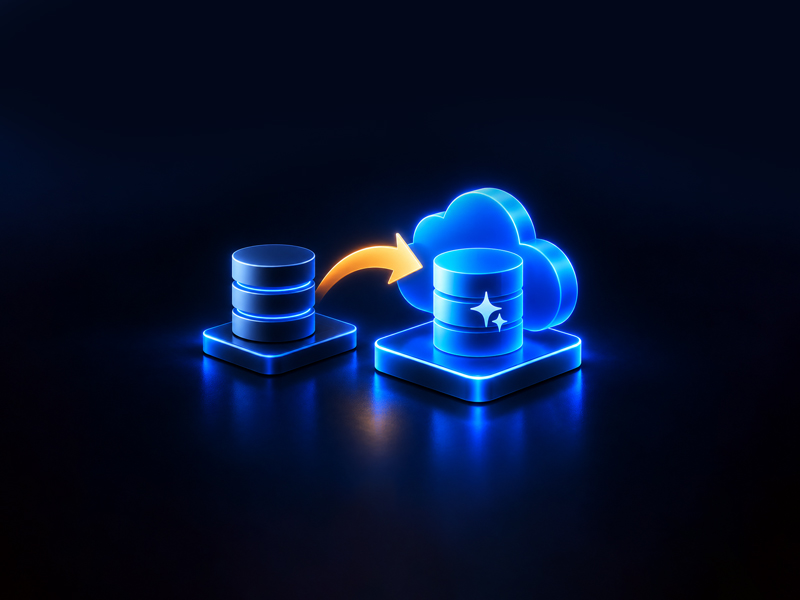
Compounding the timing pressure was a question every spin-off eventually confronts: what happens to the historical data sitting in the system you're leaving behind? The CDMO needed a clean break from its legacy ERP environment operationally, but it could not afford a clean break from the financial and operational history stored inside it. Auditors, regulators, and finance teams all needed continuity, not a gap where that legacy system used to be.
This is a pattern worth naming clearly, because it extends well beyond this one case. Legacy systems rarely get decommissioned because the business no longer needs the data inside them. They get decommissioned because the business has outgrown the system's ability to keep up, while the data itself often remains essential for years. The real challenge isn't removing the legacy system. It's carrying its history forward into whatever comes next without slowing that transition down.
Building Analytics as a Parallel Track, Not a Downstream Project
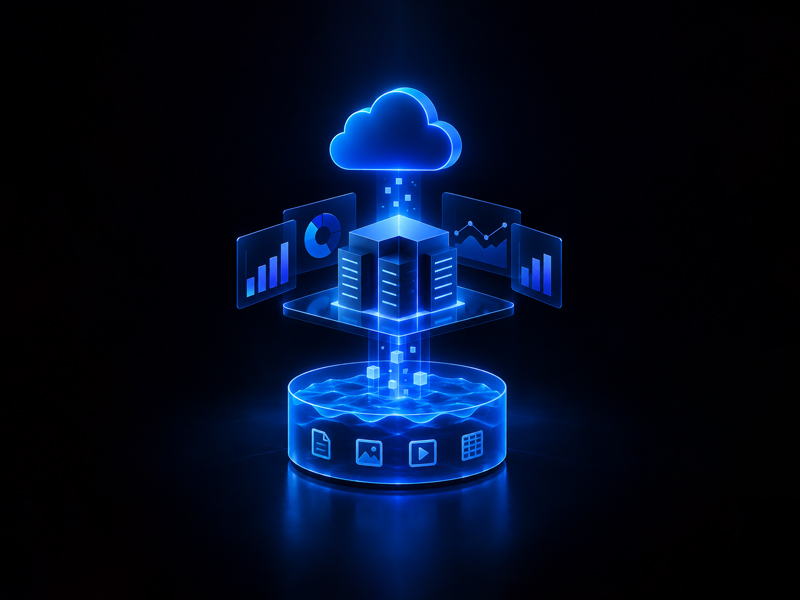
The approach taken here treated analytics as a workstream running alongside the ERP and CRM implementation, not a project that waited for them to finish. Using a Snowflake-based foundation, the team stood up ingestion pipelines that could absorb Salesforce and Microsoft Dynamics 365 data as each module went live, while separately integrating the historical data from the legacy ERP system that still needed to inform reporting.
Instead of designing a data warehouse from a blank page, the foundation relied on pre-built ingestion patterns, domain-aligned data models, and reusable transformation logic, the kind of groundwork that would normally consume the first several months of a custom build. Because that groundwork already existed, the team could focus its effort on adapting it to the specific systems and business domains involved, rather than inventing it from scratch under time pressure.
The rollout itself was phased in a way that mirrored the business's own milestones rather than an arbitrary project plan.
- Commercial visibility from Salesforce came first. Financial reporting through Dynamics 365, covering accounts payable, accounts receivable, and the general ledger, followed as the financial backbone of the new entity took shape.
- Manufacturing analytics arrived in step with the two new facilities opening in the U.S. and Germany.
- Quality data from Veeva's QMS platform, covering complaints, deviations, audits, and supplier quality, came next, giving regulated quality processes the same visibility as financial and commercial metrics.
This sequencing mattered as much as the technology itself. Each wave of the analytics platform went live exactly when the business needed it, not months after the fact.
Traditional build vs. parallel analytics approach
The difference is easier to see when the two approaches are compared side by side.
|
Traditional analytics build |
Parallel analytics approach |
|
Starts after ERP/CRM go-live |
Runs alongside ERP/CRM implementation |
|
Reporting is delayed until systems stabilize |
Reporting evolves as systems go live |
|
Legacy data may remain isolated |
Historical data is carried forward |
|
Teams often rely on manual reporting during transition |
Leaders get earlier access to trusted metrics |
|
Custom development can take months |
Reusable components shorten the path to insight |
What the Numbers Show
The results are a useful proxy for what "analytics running in parallel" actually saves an organization, in both time and cost. The CDMO reached an initial production release, including working dashboards and reports, in under three months, compared to the six to twelve months a conventional custom build would have required. Infrastructure costs came in 70 percent lower than a custom-built alternative. Historical data from the legacy ERP environment was preserved and made usable alongside the new systems, rather than orphaned during the transition.
The initiative was later recognized with a CIO Excellence Award in the Innovation Team category, which reflects less on any single technology choice and more on the discipline of treating analytics as core infrastructure for the separation, rather than a follow-on project. For leadership teams, the takeaway is not just the speed of delivery, but the need to ask the right questions earlier in the transition.
Questions Leadership Teams Should Ask Early
Before a spin-off, merger, or ERP transition, leaders should ask:
- Which reports must be available on Day 1?
- Which KPIs need to remain consistent before and after the transition?
- What historical data cannot be lost or archived away?
- Which teams are most likely to fall back on spreadsheets?
- Can analytics delivery run in parallel with system implementation?
- Are we solving for temporary reporting, or building a foundation that can scale?
These questions help move analytics planning from a downstream IT activity to part of business readiness.
The Broader Lesson for Leadership Teams
Spin-offs, mergers, and major ERP transitions all create the same underlying tension: the business needs to move forward on new systems while still depending on the data trapped in the old ones, and it needs decision-ready insight faster than a conventional build can deliver it.
The instinct to treat analytics as something you build after the "real" systems are stable is understandable, but it's also where most organizations lose months of visibility they can't get back. The more durable approach is to treat the analytics foundation as its own parallel track from day one, built on reusable, pre-engineered components rather than a ground-up custom project, so that reporting capability grows in step with the business rather than trailing behind it.
For any organization currently planning a system transition, whether driven by a spin-off, an acquisition, or a long-overdue ERP modernization, the question worth asking isn't whether the new systems will eventually deliver good reporting. It's whether the business can afford to wait for "eventually."
The approach used here, pre-built ingestion, governed data models, and phased delivery aligned to business milestones, isn't specific to Snowflake, Salesforce, or Dynamics 365. It's the same foundation KPI Partners' Enterprise Analytics Accelerator applies across ERP, CRM, HCM, and industry-specific systems, including Oracle, SAP, Microsoft Dynamics 365, Salesforce, and Workday.
Read the full case study on the pharmaceutical CDMO's spin-off to see the detailed timeline, architecture, and results behind this transition.