Author: Prashanth Ashwathram: Vice President- Technology & Consulting
Ask most finance or operations leaders why their reporting feels unreliable, and the conversation usually turns to a single system. The ERP is too rigid. The CRM doesn't talk to finance. The project system runs on its own numbers. It's an instinct to look for one system to blame, because it feels like a fixable, contained problem.
For leadership teams, the consequence is not just reporting inefficiency. It is slower decisions, conflicting forecasts, delayed visibility into project and financial performance, and reduced confidence in the numbers used to run the business.
In practice, the real issue is rarely one system at all. It's what happens in the space between systems, where finance data, sales data, project data, and operational data all live in different places, get updated on different schedules, and get reconciled by hand whenever someone needs a number that spans more than one of them. The ERP might be working exactly as designed. The CRM might be working exactly as designed. The problem is that nothing sits above them to bring their data together into one trusted answer.
This is the situation a global renewable energy enterprise found itself in, detailed in KPI Partners' case study, Enterprise SAP Analytics & Data Warehouse Transformation for a Global Renewable Energy Leader. It's also a useful case for any leadership team trying to figure out why their numbers never quite agree across departments, even though every individual system seems to be doing its job.
The Business Reality: Good Systems, No Shared Ground Truth
Over seven years, the organization had built out a wide technology footprint: a core enterprise resource planning system running finance, procurement, and supply chain; a CRM platform managing the commercial pipeline; a project delivery system tracking capital projects, budgets, and execution; and a range of engineering and product systems monitoring asset performance in the field. Each of these systems was doing exactly what it was built to do. None of them were failing on their own terms.
The failure showed up in the gaps between them. Business-critical information became distributed across finance, supply chain, sales, product engineering, project delivery, and executive operations, with no shared foundation underneath. Reporting was fragmented from one business unit to the next. Forecasting relied heavily on manual, spreadsheet-driven processes. Key metrics were defined differently depending on which team was calculating them, so two departments could report different numbers for what was supposed to be the same figure. On top of that, the organization was facing growing compliance, governance, and audit requirements, along with rising internal demand for self-service, near real-time analytics, none of which a patchwork of disconnected systems could support.
The result was a familiar one for any fast-growing, multi-system enterprise: excellent operational systems individually, and no single, trusted version of the truth across them.
Why "Fix the System" Was Never the Right Question
Faced with this kind of fragmentation, there's a natural but misguided instinct to treat it as a problem with one particular system, usually whichever one is newest, most visible, or hardest to work around. The temptation is to consolidate everything onto a single platform, or to treat the core ERP as the thing standing in the way of better reporting.
That instinct usually leads in the wrong direction. Each of these systems existed because it did something the others couldn't. The CRM platform was built for sales pipeline management, not financial reporting. The project delivery system was built for capital project tracking, not customer data. Replacing or consolidating any one of them would solve a narrow problem while leaving the underlying issue untouched: there was no governed layer capable of bringing their data together into something finance, operations, and leadership could all trust at the same time.
The more useful question isn't which system needs to change. It's whether the business has a governed, scalable way to unify what every system already knows, without disrupting any of the operational work running on top of them.
Building a Single Source of Truth Above the Existing Systems
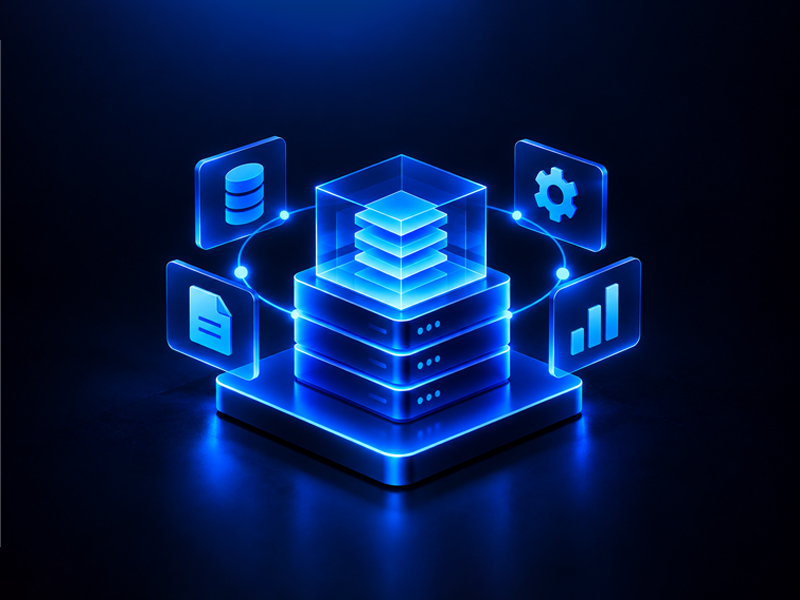
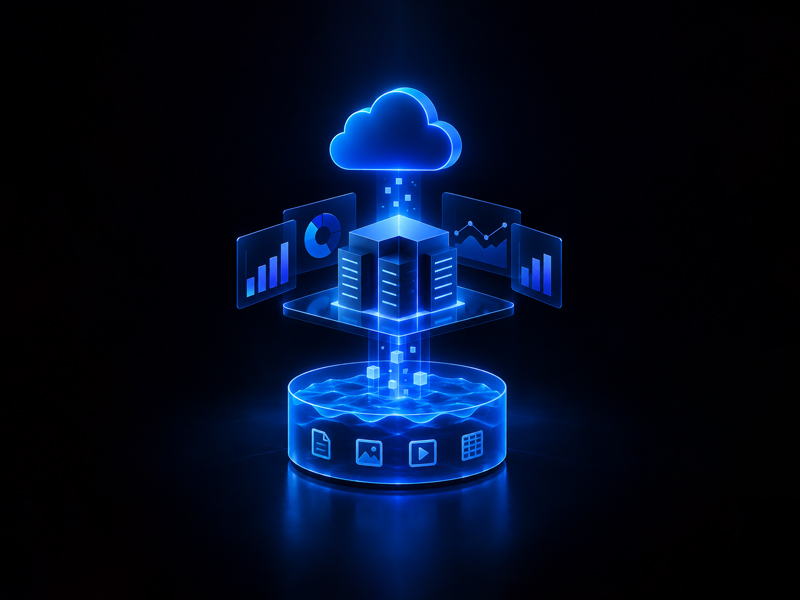
The approach preserved the role of existing operational systems and built a governed enterprise data warehouse above them. A modern data platform combining SAP Datasphere, Google Cloud BigQuery, and Google Cloud SQL brought together data from the core ERP, the CRM platform, the project delivery system, and the engineering and product systems into a single governed foundation. On top of that foundation, SAP Analytics Cloud delivered executive performance dashboards and financial and operational analytics back out to the business. The approach unified data from existing operational systems without positioning system replacement as the primary path to better reporting.
Because the ERP was the largest and most complex of these sources, the team used KPI Partners’ Enterprise Analytics Accelerator for SAP S/4HANA, a packaged, reusable set of ingestion patterns, business-ready data models, governance controls, and reporting structures purpose-built for SAP-centric enterprises, to accelerate that piece of the foundation rather than modeling it from a blank page. Equivalent ingestion and modeling work brought the CRM, project, and engineering data into the same governed structure, all mapped to standardized, harmonized metric definitions so that Finance, Supply Chain, Sales, Product Engineering, Project Delivery, and Executive Operations were finally working from the same numbers. Because the accelerator is platform-agnostic, the same approach applies regardless of which cloud environment an organization has standardized on, whether that's Google Cloud, as it was here, or Databricks, Snowflake, AWS, or Microsoft Fabric.
The value of this approach was not simply technical integration. It gave the business a governed layer where finance, sales, project delivery, and operations could use common definitions without forcing each function to abandon the systems they relied on. The result was a single governed data warehouse feeding near real-time reporting across every major business function, replacing fragmented reporting and manual reconciliation with one consistent, trusted source of truth.
What the Numbers Show
The scale of the outcome reflects how much value had been sitting untapped in data that already existed, just never brought together.
- The organization went live with more than 800 enterprise reports and dashboards spanning Finance, Supply Chain, Sales, Product Engineering, Project Delivery, and Executive Operations.
- Reporting performance itself got 30 percent faster, a direct result of optimized, unified data models rather than the disconnected queries and manual pulls teams had relied on before.
- Manual financial reporting effort dropped by 70 to 80 percent, freeing finance teams from the reconciliation work that had previously consumed a significant share of their time.
- The organization also reached time-to-value 50 to 60 percent faster than a custom-built implementation would have required, a direct result of building on pre-engineered accelerators rather than starting from scratch.
- The reporting framework itself came out 100 percent governed and audit-ready, with role-based security and standardized controls built in rather than layered on after the fact.
Beyond the numbers, the qualitative shift was just as significant.
- Teams across the business moved from relying on their own disconnected views to working from the same governed, harmonized set of metrics every day.
- Business users gained direct, self-service access to trusted data products and dashboards, reducing their dependence on IT for day-to-day reporting needs.
And because the underlying data warehouse was built on a governed foundation from the outset, the organization now has a ready base for AI, machine learning, and predictive analytics initiatives, rather than needing to revisit its data architecture before it can take that next step.
The Broader Lesson for Multi-System Enterprises
This pattern extends well beyond renewable energy, and well beyond any single ERP vendor. Any organization that has grown past a handful of core systems, in manufacturing, utilities, financial services, or industrial services, tends to accumulate the same kind of fragmentation over time: strong individual systems, each doing its job well, with no shared foundation connecting them.
The instinct to solve this by replacing or consolidating systems is usually the wrong one. The systems aren't the problem. The absence of a governed layer that unifies what they each already know is. The more durable path is to leave operational systems doing what they do best and build a single, trusted analytics foundation above them, one that can absorb data from every system the business relies on without disrupting the work already running on top of them.
For any finance or operations leader trying to explain why the numbers never quite match across departments, the real question isn't which system to fix. It's whether the business has one governed place where every system's data finally agrees.
This pattern usually applies when different teams report different numbers for the same metric, finance depends on spreadsheets to reconcile systems, leadership dashboards lag operational reality, or IT becomes the bottleneck for every cross-functional reporting request.
See How This Played Out, Step by Step
Read the full case study, Enterprise SAP Analytics & Data Warehouse Transformation for a Global Renewable Energy Leader, to see how a global renewable energy leader unified SAP, Salesforce, Oracle Unifier, engineering, and cloud data into a governed enterprise analytics foundation.