Author: Balaswamy Kaladi: Principal Architect - Data Engineering
Standard cost is what a unit should cost. Actual cost is what it did cost. Oracle E-Business Suite (EBS) Cost Management already captures both, along with the variance detail that explains why the two diverge: purchase price variance, work in process (WIP) usage variance, WIP efficiency variance, standard cost variance, cycle count adjustments, and physical inventory variances, all recorded through normal business transactions.
For most finance teams, the issue is not that EBS lacks costing data. The issue is that this data is usually reviewed at close, once the numbers are already locked in rather than while there is still time to act on them. Closing that gap does not require replacing EBS, changing a costing method, or waiting for an ERP modernization program. It requires turning the costing data already inside EBS into a continuous margin signal, and building that signal is where the real work, and KPI Partners' specific expertise, comes in.
The Data Exists. The Signal Has to Be Built.
EBS Cost Management supports comprehensive, transaction-level cost tracking across standard costs, actual costs, inventory movements, purchasing, and WIP activity. That detail has always been there. What most organizations lack is a governed way to turn transaction-level variance into a connected view across cost, inventory, production, and profitability, one that can be sliced by product, plant, item, supplier, job, cost element, and time period without every request turning into a custom extract.
Building that view is a data engineering problem as much as a finance one. It means designing ingestion that pulls consistently from EBS Cost Management, Inventory, and WIP tables, resolving how costs should be allocated when they don't map cleanly to a single product or customer (shared raw materials, freight, rebates, multi-plant production runs), and defining variance and margin metrics once so finance, operations, and plant leadership are working from the same numbers rather than debating whose report is right.
How KPI Partners Builds This
The Enterprise Analytics Accelerator is how KPI Partners delivers this for Oracle EBS finance teams today. The approach has three parts:
Pre-built ingestion and a governed data model
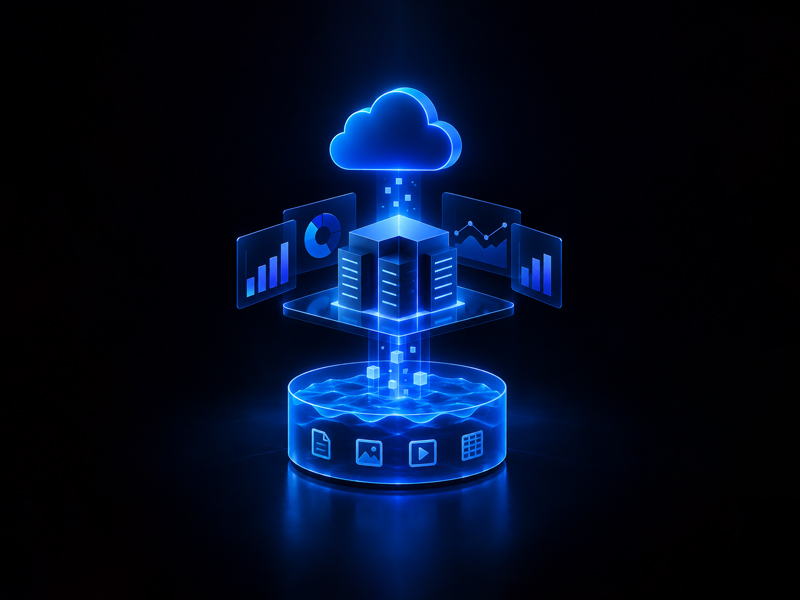
Rather than building extracts from scratch for every costing request, the accelerator starts from pre-built ingestion pipelines for EBS Cost Management, Inventory, and WIP data, organized into a governed data model designed specifically around EBS's costing structures. Purchase price variance, standard cost variance, and WIP usage and efficiency variances land in a consistent structure rather than as one-off pulls.
A semantic layer that resolves allocation logic once
The hardest part of costing analytics is rarely the variance calculation itself, it's the allocation questions underneath it: how a shared raw material cost splits across the products that used it, how freight gets allocated back to the shipments that drove it, how a job that starts in one plant and finishes in another gets costed consistently. KPI Partners' data engineering team builds that allocation logic into the governed semantic layer once, so every dashboard and every team downstream inherits the same definitions instead of re-deriving them.
Deployment on the platform the business already runs
The resulting metrics and dashboards deploy on whatever cloud platform and business intelligence (BI) tool the organization already uses, so adopting this does not mean adding a new tool to the finance team's stack.
Proven on This Exact Problem
This isn't a new category of problem for KPI Partners. In an engagement, a multi-billion dollar global manufacturer of labeling and packaging materials needed to determine true product and customer profitability from data sourced primarily out of Oracle EBS, and the allocation challenges were substantial: splitting scrap costs across specific customer and product combinations, allocating shared raw material costs across multiple products, allocating inbound and outbound freight, applying customer and vendor rebates at the product level, and costing consistently across multi-plant production scenarios where one plant starts a job and another finishes it.
KPI Partners built the allocation engine that solved this, integrated into the monthly close process and largely automated, delivered on time and under budget. The client chose KPI Partners over a larger consulting firm specifically for the combination of financial and technical depth needed to get the allocation logic right. That engagement used Oracle Hyperion PCMCS rather than today's cloud-native stack, but the underlying expertise, resolving exactly these allocation problems against EBS-sourced cost data, is the same expertise built into the Enterprise Analytics Accelerator's semantic layer today, now deployed on modern cloud and BI platforms rather than a standalone EPM tool.
What This Changes for Finance and Operations
A plant controller gets variance by plant, line, job, item, or cost element, updated as production runs rather than reconstructed at close. An FP&A leader gets a margin view that separates pricing pressure from mix shift, material cost movement, and production inefficiency, because the allocation logic underneath it was resolved once rather than argued over in every meeting. A CFO gets a continuous read on margin risk instead of a quarter-end explanation of what already happened. And IT teams get a starting framework built around EBS's specific costing structures, rather than a custom build for every new report request.
Margin Protection Doesn't Have to Wait for the Close
The costing data behind proactive margin management already exists inside EBS. What has historically been missing is the governed engineering work, resolving allocation logic, defining metrics once, and deploying them where the business already works, that turns that data into a signal finance and operations can act on before the numbers are already locked into a quarter.
Related Reading
This blog is part of a broader series on getting more from Oracle EBS analytics without waiting on ERP modernization. See the series starting point: Why Oracle EBS Analytics Doesn't Have to Wait for ERP Migration.