Author: Piyush Choubey - Practice Director
Key takeaways:
- The most valuable enterprise agents combine two capabilities at once: Grounded reasoning, so they draw on the right business context, and governed connectivity, so they can safely act on what they find.
- Cortex Sense grounds Snowflake agents in governed business context at runtime, while Snowflake's acquisition of Natoma, now closed, brings a verified Model Context Protocol (MCP) gateway that lets agents securely connect to and act across enterprise applications, with identity, permissions, and audit built in.
- Both capabilities are still maturing, Cortex Sense in private preview and Natoma's integration rolling out, which makes this the ideal moment to design the governance model early. KPI Partners helps enterprises design that pairing deliberately, so agents are ready to act the moment the capability is.
Enterprise AI agents are moving into production at real speed. Gartner projects that forty percent of enterprise applications will include task-specific AI agents by the end of 2026, up from less than five percent at the start of last year. That is a remarkable pace of adoption, and it puts a clear question in front of every architect and platform leader: What has to be true for an agent to move beyond answering questions into doing real work, safely and at scale?
My view, from working alongside architects and platform leads through this exact transition, is that the answer is two capabilities working together. An agent needs to reason from the right business context, and it needs governed, well-defined access to act on what it concludes. Snowflake's two most consequential agentic announcements this year, Cortex Sense and the acquisition of Natoma, are built to deliver exactly that pairing. Designing them together, deliberately, is what turns a capable agent into one your organization can trust to act.
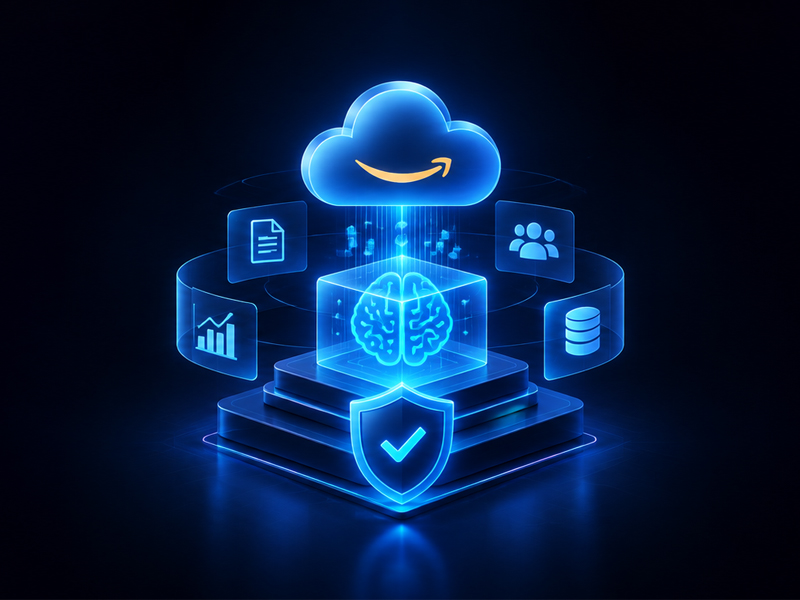
Snowflake’s AI platform is increasingly bringing these capabilities together. Cortex Sense addresses the challenge of grounding agents in enterprise context. Semantic Views and Horizon Context provide governed business meaning. Cortex Agents provide reasoning and orchestration. Connectivity built on the Model Context Protocol (MCP) strengthened by Snowflake’s acquisition of Natoma and the recently introduced Cortex AI Gateway provides a path toward governed action across enterprise systems. The opportunity for enterprises is not simply to adopt each capability as it arrives. It is to design them together as one architecture. That is what turns an intelligent agent into an enterprise-ready one.
The Enterprise Agent Problem: Being Right Is Not Enough
A customer renewal agent may correctly identify declining product usage, recent support escalations, and an approaching renewal date, then conclude that the customer is at risk of churn and needs intervention. But enterprise value begins only when the agent can act safely on that insight: updating the CRM, notifying the account owner, creating a follow-up task, or escalating the issue to the right team.
For that to work, the agent must understand governed business terms such as at-risk customer, revenue, active customer, and renewal, and reason from authoritative definitions rather than inventing its own. It also needs clear operating boundaries: it should perform only actions appropriate to its role, avoid destructive changes, and seek approval before external communication.
That creates two kinds of trust: epistemic trust in the agent’s business context, and operational trust in the permissions within which it acts. Enterprise-ready agents need both.
Two Capabilities, Designed to Work as One
A useful way to think about a production enterprise agent is through four connected layers: understand, decide, act, and prove.
|
Enterprise requirement |
Primary capability |
|
Understand |
Grounded business context |
|
Decide |
Agent reasoning and planning |
|
Act |
Tools, interfaces, and enterprise connectivity |
|
Prove |
Governance, audit, and observability |
These layers should not be designed independently. An architecture that focuses only on reasoning tends to produce impressive demonstrations that cannot safely enter production. An architecture that focuses only on security and connectivity can produce a tightly controlled system that still makes poor decisions, because it does not understand the business.
The goal is an agent that is both: right about the business question, and precise about what it does next.
Grounding the Agent: Context You Can Trust
Cortex Sense is Snowflake's answer to the grounding half. It works as a runtime context layer that assembles what an agent needs to reason well, drawing on query history, technical metadata, business intelligence (BI) dashboards, and the governed business definitions stored in Horizon Context. In practice, this means an agent asking about revenue reads the definition your organization has already agreed on, rather than guessing among several possible versions. In our earlier piece on Horizon Context, we made the case that governed meaning is now a board-level asset. Cortex Sense is the mechanism that puts that governed meaning to work the moment a question is asked, without a data team manually configuring it for every use case.
Snowflake's own internal testing found that grounding lifted agent accuracy on complex enterprise queries from 47 percent to 83 percent, a strong signal of how much context improves an agent's reasoning. It is a Snowflake-reported figure rather than an independent benchmark, and there is more improvement still to come as accuracy climbs toward the reliability a fully autonomous workflow needs. Cortex Sense remains in private preview, with general availability not yet announced, and today it works within Snowflake. That makes now the right time to define your business context and governance model, so the capability delivers full value the moment it is ready to scale.
Giving the Agent Governed Reach: What an MCP Gateway Does
Connectivity is the other half, and this is where Snowflake's acquisition of Natoma comes in. To make the mechanics concrete for anyone newer to this space: The Model Context Protocol, or MCP, is the emerging standard that lets an AI agent discover and call tools, meaning it can query a database, update a record in a business application, or send a message, rather than only generating text. A gateway sits in front of that connectivity so an agent requests permission before it touches any tool, and the gateway becomes the single place where identity, policy, and the audit trail live, rather than those controls being spread thin across many separate point-to-point connections.
Natoma, whose acquisition by Snowflake has now closed, brings exactly this kind of verified gateway, along with deep expertise in identity governance and privileged access management. As it integrates into Snowflake's platform, including Cortex Agents, CoWork, and CoCo, agents gain a securely governed path to applications, cloud environments, and on-premises infrastructure through one centralized layer.
Integration into these customer-facing surfaces is actively rolling out, which is a healthy pace for a capability this consequential, and it is a good reason to design the governance model now, so your organization is ready to make full use of it as it lands.
Matching Governance to What Each Agent Actually Does
A governed gateway works best paired with a thoughtful policy for how much autonomy each agent earns. Gartner's guidance here is instructive: The strongest results come from a proportional model, where the level of governance scales with an agent's level of autonomy, rather than applying the same controls uniformly across every agent. A read-only reporting agent can operate under a light-touch policy that keeps it fast and simple to deploy. An agent permitted to update customer records or send external communications earns a correspondingly stronger set of controls. A governed gateway is what makes that distinction practical and enforceable, rather than a policy that only exists on paper.
Building on What You Already Have
Many organizations have already connected a handful of agents directly to specific systems to capture early wins. That groundwork is genuinely useful, and it is the natural starting point for what comes next. As the number of agents grows, bringing those connections under a governed gateway lets the identity, policy, and audit trail you have already started scale cleanly with them, rather than each new agent adding another one-off connection to track. Consolidating earlier, while the agent count is still manageable, is simpler than doing it after the number multiplies.
Where KPI Partners Comes In
As a Snowflake partner, KPI Partners helps enterprises design agent governance end to end, from the semantic foundation an agent reasons against to the connectivity policy that governs what it can do, so that scaling agents is a deliberate architecture decision from the start. We approach it business first, starting from the workflows and priorities that matter most to your organization, and building the governance model around those decisions. This is how we would deliver it; The goal is agents your teams can confidently put to work.
Design Both Together, and Scale With Confidence
If there is one stance I would leave you with, it is this. As agentic AI moves from pilot to production at the pace Gartner's numbers suggest, the organizations that scale fastest and most confidently will be the ones that designed grounding and connectivity together from the start, matched governance to what each agent is meant to do, and treated that design as a deliberate architecture decision. Cortex Sense and Natoma give that design a natural home inside Snowflake. The organizations that build it well now will be the ones whose agents are trusted to act the moment the opportunity is ready.