Every enterprise leader has now seen the demo. An AI agent reads a request, reasons through the steps, calls a few tools, and returns an answer that looks remarkably close to what a capable analyst would produce. The promise is intoxicating autonomous workflows that don’t just generate text but decide and act across the systems that run your business.
Then the pilot meets reality. The agent that dazzled in a sandbox starts citing numbers that don’t reconcile. It confidently references a policy that was retired two years ago. It hands off a task to a second agent that interprets the same data differently. And the project that was supposed to prove out agentic AI quietly stalls in a slide deck labeled “Phase 2.”
This pattern is now common enough to have a name. Industry research consistently finds that the large majority of AI pilots never reach production. The reason is rarely the model. Today’s foundation models are extraordinary reasoners. What they lack is context and the distance between what a general-purpose model knows and what your enterprise actually knows is what we call the context gap.
What the context gap really is
A foundation model is trained on the public internet. It is brilliant at language, logic, and general knowledge. But it has never seen your chart of accounts, your product hierarchy, your pricing exceptions, your regulatory obligations, or the twenty years of operational judgment encoded in how your teams actually make decisions. It doesn’t know that “active customer” means something specific in your business, or that three of your source systems disagree on what a “shipment” is.
When an agent operates without that context, it does exactly what it was designed to do: it produces a fluent, plausible answer. It just isn’t your answer. And in an agentic setting — where the model doesn’t just suggest but acts, and where one agent’s output becomes another’s input — small gaps compound into expensive errors, compliance exposure, and a steady erosion of trust.
The context gap is not a prompting problem. You cannot prompt-engineer your way to an answer the system has no reliable way of knowing. It is not a model problem either; swapping in a larger model makes the reasoning sharper, not the enterprise knowledge truer. The context gap is an infrastructure problem and that is precisely why it has been so persistent, and so underestimated.
Why this is a data foundation problem in disguise
Here is the uncomfortable truth that the agentic AI conversation often skips: an agent is only as good as the data foundation underneath it. You can’t ground a model in knowledge that is fragmented across legacy warehouses, trapped in on-premise systems, inconsistently defined, and ungoverned. Context isn’t something you bolt on at the end of an AI project. It is something you engineer into the foundation from the start.
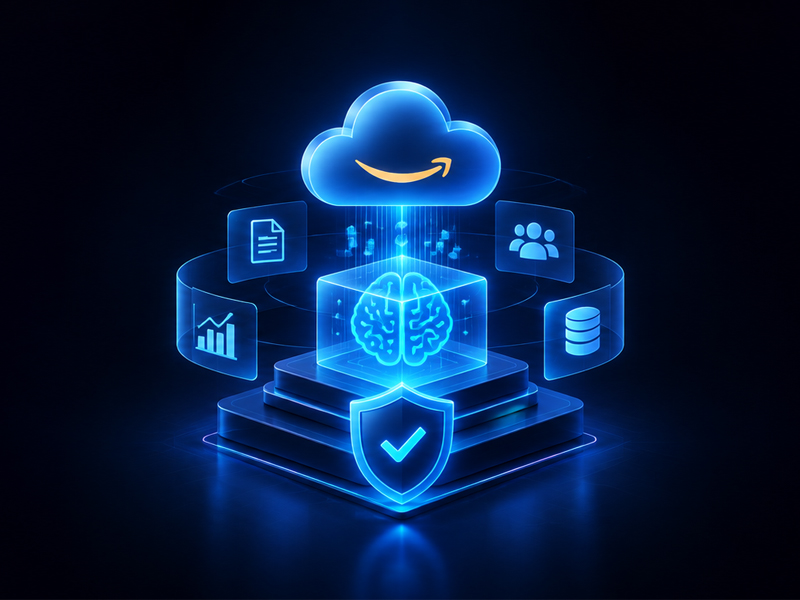
Closing the context gap means getting four things right, in order:
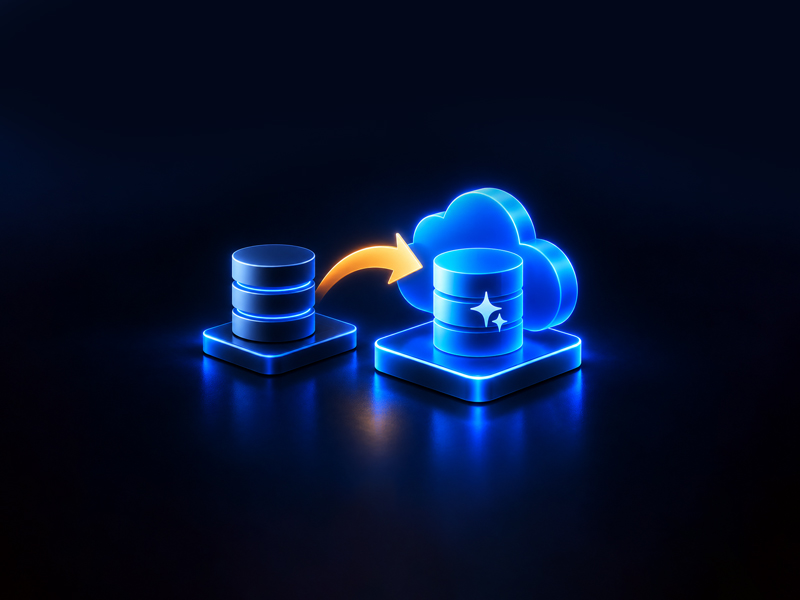
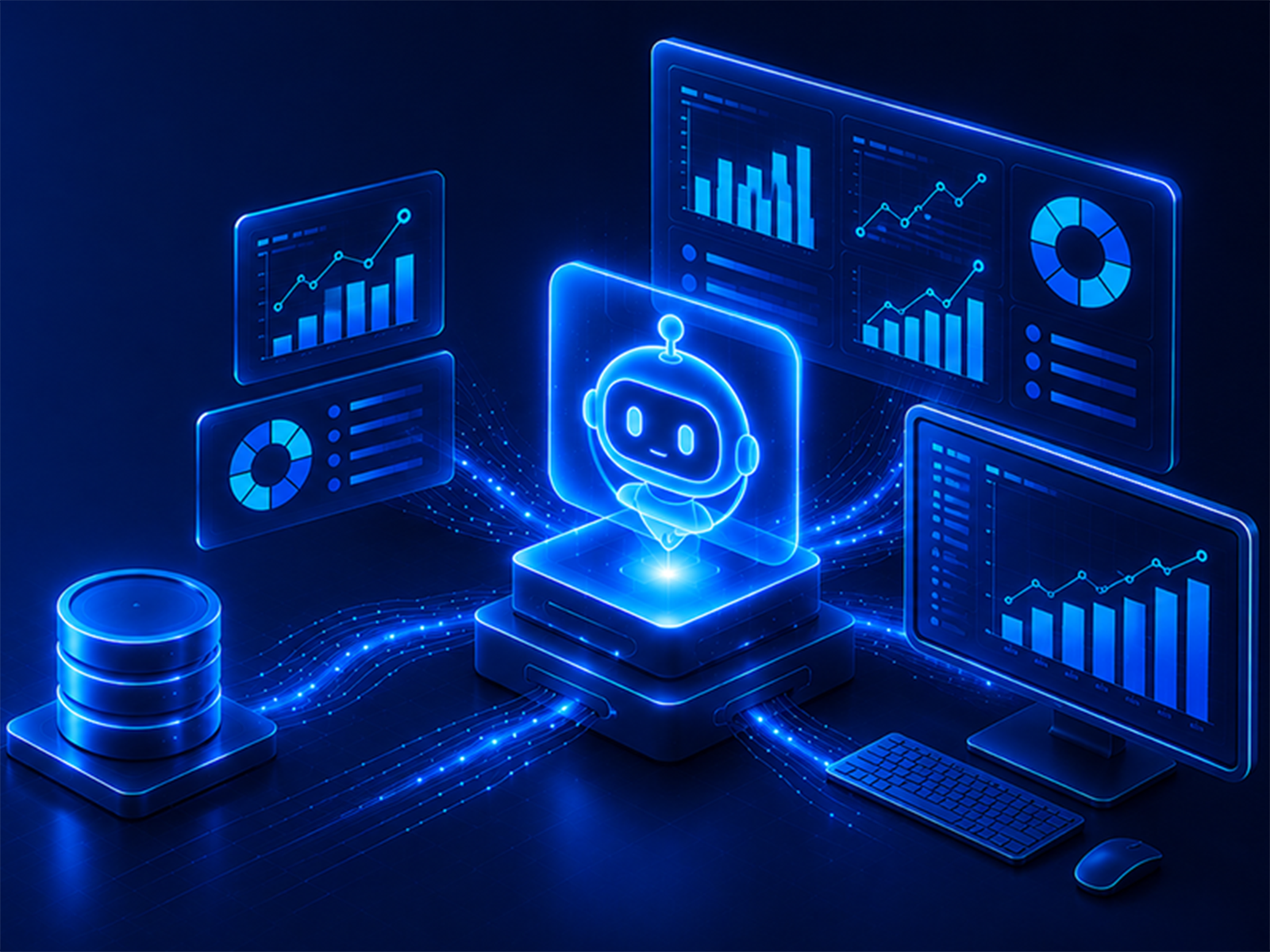
• An AI-ready data foundation: Before an agent can reason over your business, your business has to be readable. That means liberating data from silos and legacy platforms, modernizing pipelines, and landing it somewhere unified and trustworthy. The goal isn’t to be cloud-ready — it’s to be AI-ready, which is a higher bar. Cloud-ready means your data moved. AI-ready means your data is clean, current, connected, and consumable by machines that will act on it.
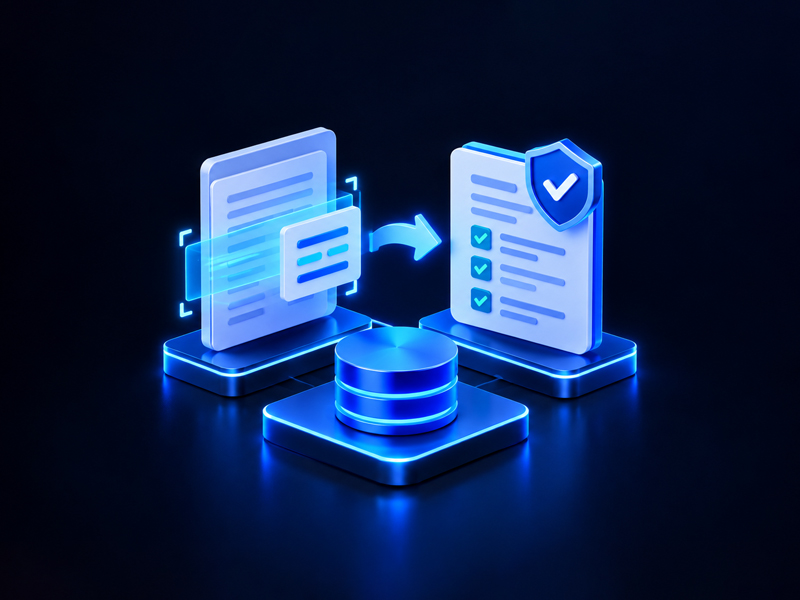
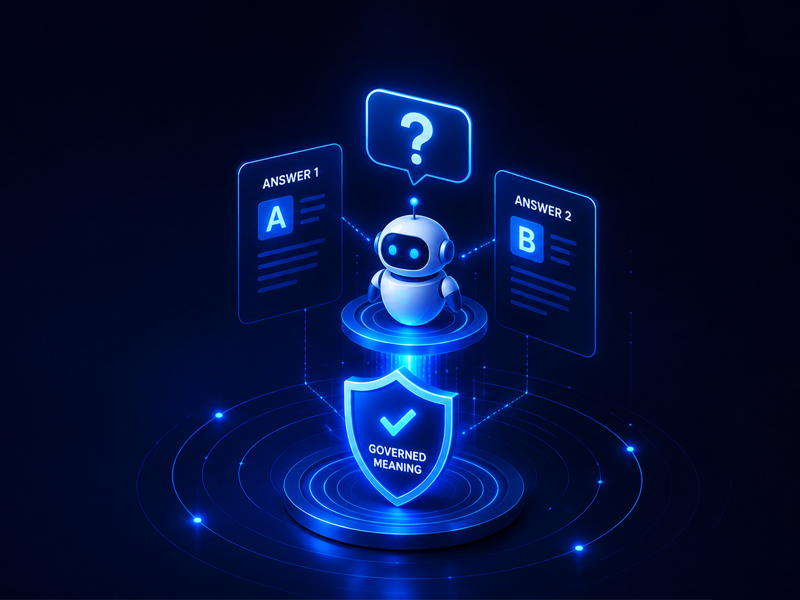
• A semantic layer that carries meaning: Raw tables don’t explain themselves. A revenue figure without a definition is a liability the moment an agent uses it. The semantic layer — your metrics, business definitions, domain ontology, and relationships are what turns data into knowledge an agent can reason with correctly. This is the single most overlooked component of enterprise AI, and the one that most directly separates an agent that sounds right from one that is right.
• Grounded retrieval: Techniques like retrieval-augmented generation only deliver trusted answers when they retrieve from trusted, well-modeled sources. Done well, grounding ties every agent response back to verifiable enterprise data instead of the model’s training-era guesswork. Done poorly, it simply gives a hallucination a citation.
• Governance and observability built in: In an agentic world, autonomy without oversight is a risk no board will accept. Closing the context gap durably means knowing what every agent did, why it decided what it decided, and whether it stayed inside the guardrails with the observability to catch drift before it becomes a headline. Trust is not a feature you add later; it is a property you design in.
The KPI Partners approach: foundation first, proven at scale
This is the work KPI Partners has been doing for nearly two decades, long before “agentic” entered the vocabulary. We have spent twenty years modernizing the data estates of more than 300 enterprises across financial services, healthcare, life sciences, manufacturing, retail, and high-tech. That heritage matters now more than ever, because the hardest part of agentic AI is the part we have always specialized in making enterprise data trustworthy, meaningful, and ready to be acted upon.
Our approach is deliberately foundation-first and accelerator-led. Through the KPI Partners’ GenAI assisted Migration accelerators, we compress the unglamorous-but-decisive work — migrating off legacy platforms, building domain-aligned data products, and establishing governance using automation rather than headcount. Our migration accelerators move enterprises off Oracle, Informatica, Teradata, and legacy BI onto modern platforms like Snowflake, Databricks, and Microsoft Fabric, landing them AI-ready, not merely cloud-ready. And through the KPI Enterprise AI Lab™, we take agentic and GenAI use cases from proof of concept to production in 90 days — tied to measurable, finance-validated outcomes, not science projects.
The results speak in the language enterprises actually care about. We have built a multi-agent proposal system grounded in live enterprise data that eliminates hallucinations and cuts proposal time dramatically. We have deployed agentic AI for real-time retail inventory intelligence and stockout prediction. We have delivered GenAI-powered fraud intelligence that reduced losses by 32%. In every case, the differentiator wasn’t a cleverer model. It was context engineered into the foundation, governed end to end, and grounded in data the business already trusted.
The bottom line
Agentic AI will reshape how enterprises operate. But the organizations that win won’t be the ones with access to the best models — everyone has that. They’ll be the ones who closed the context gap: who did the disciplined work of building an AI-ready foundation, a semantic layer that carries meaning, grounded retrieval, and governance that earns the trust of regulators and boards alike.
Agents are only as smart as the foundation beneath them. We’ve spent twenty years building that foundation. Now we’re using it to put agentic AI into production.
Ready to move agentic AI from pilot to production? Talk to a KPI Partners expert about building the context layer your agents need to deliver real outcomes.