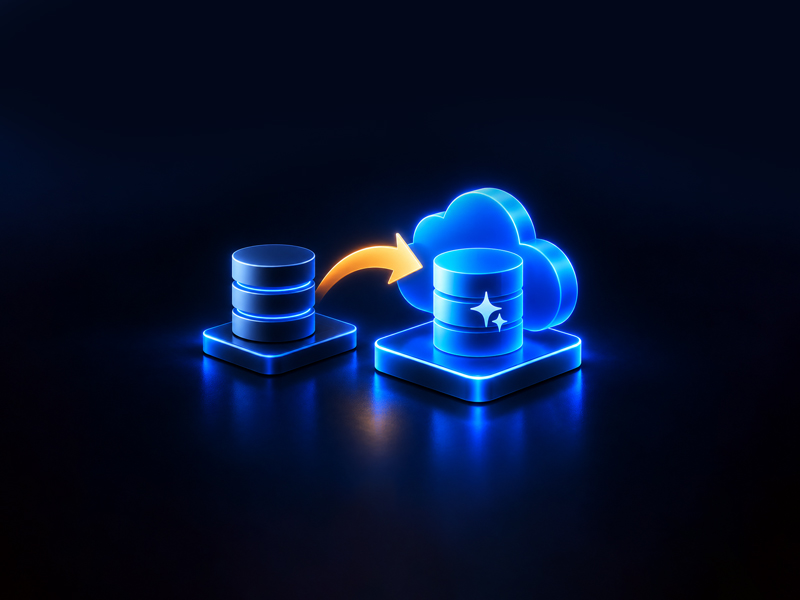
As enterprises modernize data platforms; many are reevaluating Oracle Analytics Cloud investments and looking for tighter integration with Microsoft-centric analytics strategies.
The Need for Unified Analytics
Organizations increasingly want a connected analytics ecosystem where reporting, governance, collaboration, AI, and data engineering operate on a common foundation.
Challenges with OAC Environments
1. Fragmented analytics experiences
Oracle Analytics Cloud often coexists with spreadsheets, departmental reporting tools, and other BI platforms, leaving users to move between disconnected experiences to answer a single question. Each tool carries its own interface, security model, and definition of key metrics, which fragments the analytics journey. The effect is slower decisions and inconsistent answers depending on where someone happens to look.
2. Multiple platform dependencies
OAC deployments are frequently tied to a specific stack of Oracle data sources, integrations, and infrastructure, which constrains flexibility as the wider data estate modernizes. These dependencies make it harder to adopt new cloud, AI, or data engineering capabilities without significant rework. Over time the platform becomes a constraint on the broader strategy rather than an enabler of it.
3. Governance complexity
Managing access, security, and data definitions across OAC content can become difficult as usage spreads and ownership blurs. Inconsistent rules around row-level security, certification, and metric definitions undermine confidence in the numbers. Without a unified governance approach, compliance and audit effort rises while trust in reporting falls.
4. Difficulty aligning analytics with broader investments
Many organizations are standardizing on a connected analytics and data strategy, yet OAC often sits apart from that direction. Bridging it to modern cloud, governance, and AI investments typically means extra integration, duplicated logic, and added cost. The result is an analytics layer that runs alongside the wider strategy instead of advancing it.
5. Limited standardization across business units
When individual teams build and govern OAC content in their own way, definitions, layouts, and security models drift apart across the organization. The same metric can be calculated differently in two reports, leaving leaders to reconcile conflicting figures. This lack of a common standard slows reporting and makes enterprise-wide consistency hard to achieve.
Why Power BI and Fabric
1. Data integration
Microsoft Fabric brings ingestion, pipelines, and dataflows into one environment, so data from across the OAC estate and beyond can be connected without a patchwork of separate tools. OneLake acts as a single logical store, reducing the copies and movement that fragment legacy setups. The outcome is fewer integration seams and a cleaner path from source system to report.
2. Data engineering
Fabric provides notebooks, Spark, and lakehouse capabilities for transforming and preparing data at scale within the same platform that serves reporting. Engineering and analytics teams work against shared data rather than maintaining parallel pipelines. This shortens the distance between raw data and trusted, analysis-ready models.
3. Warehousing
A native, scalable warehouse experience supports structured analytics workloads alongside the lakehouse, letting organizations standardize on one foundation instead of stitching together separate systems. Compute scales to demand without re-platforming as volumes grow. This gives a clear runway from departmental reporting to enterprise-scale workloads.
4. Governance
Integration with Microsoft Purview, sensitivity labels, lineage, and Entra ID delivers a unified approach to security, compliance, and trust across the whole estate. Data definitions, access, and certification are managed consistently rather than per tool. Governance teams extend controls they already operate instead of standing up a separate model.
5. Visualization
Power BI provides interactive, self-service reporting on top of governed, reusable semantic models, so insights stay consistent even as users explore freely. Familiar interfaces and tight links to Excel and Teams lower the barrier to adoption. Business users reach trusted answers quickly without sacrificing control.
6. AI
Copilot and Fabric's AI capabilities bring natural-language querying, narrative generation, and AI-assisted authoring directly into the analytics flow. Because intelligence sits natively on the same governed data, organizations adopt it without bolting on separate tooling. This moves AI from a future ambition to a practical, everyday part of reporting.
How GenAI Changes Modernization Economics
Modern migration accelerators automate inventory analysis, dependency mapping, report classification, and migration planning. This reduces risk and improves predictability.
KPI Partners Modernization Methodology
Complimentary Assessment:
Inventory OAC reports, dashboards, data models, and dependencies. Evaluate migration readiness, estimate effort, and build a phased roadmap.
QuickStart:
Migrate a representative set of analytics assets into Power BI. Validate architecture, security, governance, semantic modeling, and business outcomes.
Migration Factory:
Scale migration through automation-driven execution and enterprise governance practices.
Practical Recommendations
Align modernization with broader data strategy. Standardize semantic models. Build governance early. Prioritize business outcomes over report replication.
Customer Success Example
Organizations pursuing analytics consolidation have leveraged KPI Partners' modernization framework to reduce platform complexity, accelerate adoption, and create stronger foundations for AI-driven analytics.
Conclusion
Moving from OAC to Power BI is not simply a platform migration. It is a strategic modernization initiative that supports governance, AI readiness, operational efficiency, and long-term analytics innovation.