Limits of Traditional Postgres Architectures
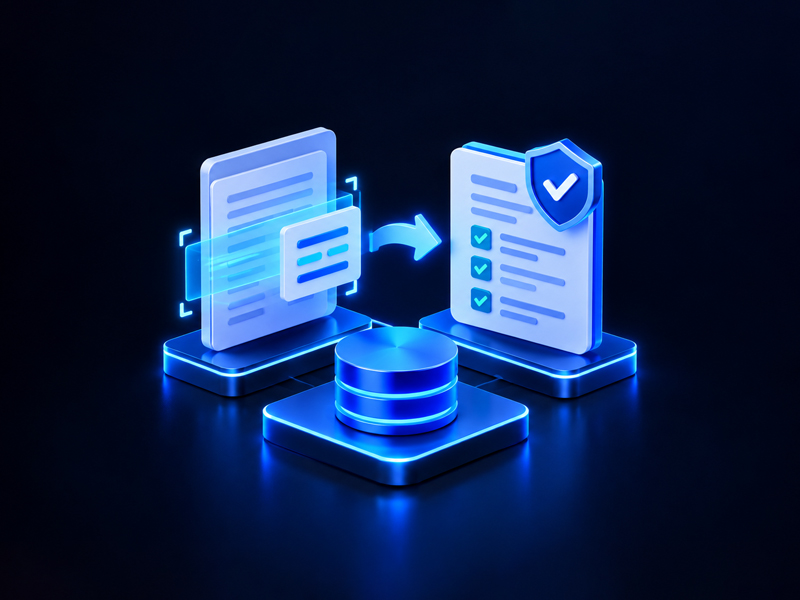
Traditional enterprise architectures separate PostgreSQL transactional systems from analytics platforms, connecting them through layers of ETL pipelines. While this model works at a small scale, it becomes fragile as data volumes and AI demands grow. Replication workflows introduce latency, increase infrastructure costs and require continuous maintenance as schemas evolve. Engineering teams often spend more time managing data movement than delivering innovation. Governance also fragments across systems, with inconsistent access controls and audit policies. As organizations pursue real-time analytics and AI-driven applications, this ETL-centric model limits agility and delays insight when speed matters most.
What Is Snowflake Postgres?
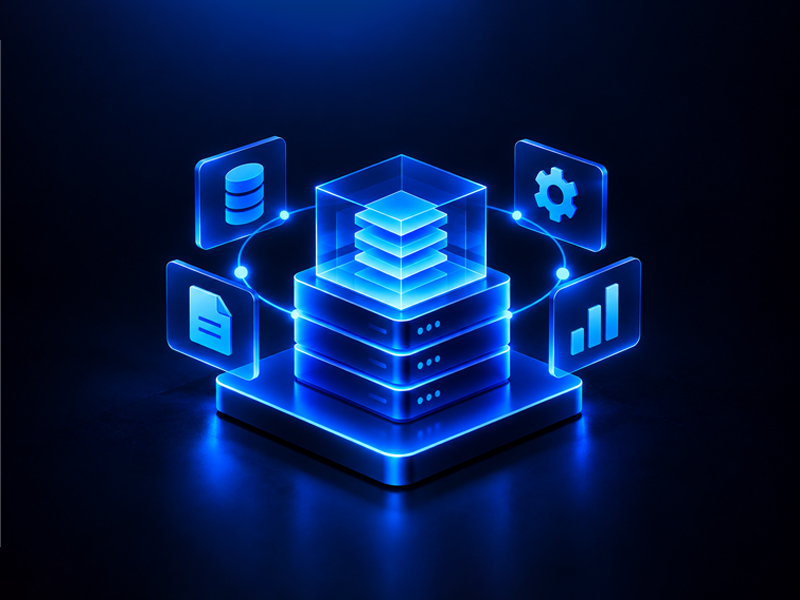
Snowflake Postgres is a managed PostgreSQL service built inside the Snowflake AI Data Cloud. It enables organizations to run transactional workloads and analytics on the same platform. It operates within a unified governance boundary and eliminates the need for complex replication between operational databases and Snowflake.
Snowflake Postgres supports full community PostgreSQL compatibility. It works with existing applications, drivers, ORMs and extensions such as pg_vector and PostGIS with minimal code changes. With the pg_lake extension, teams can move data and interact with open formats like Apache Iceberg. This approach reduces reliance on third-party ETL tools while maintaining flexibility and scale.
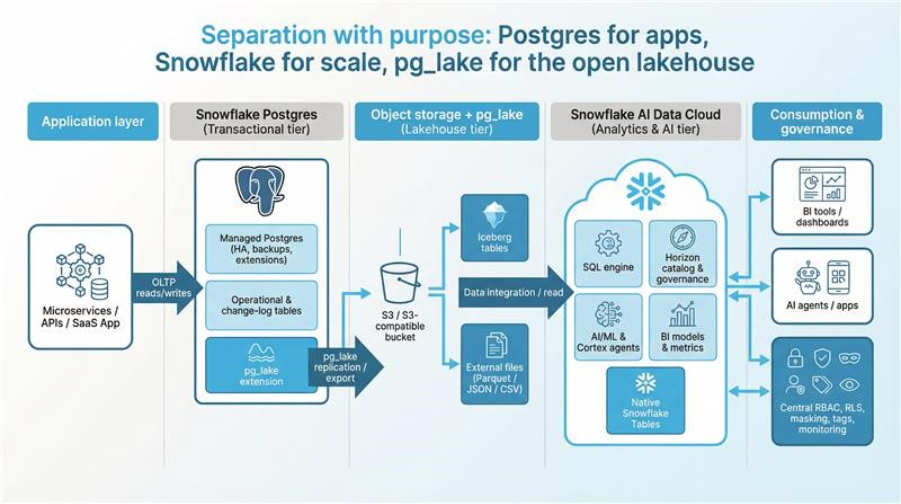
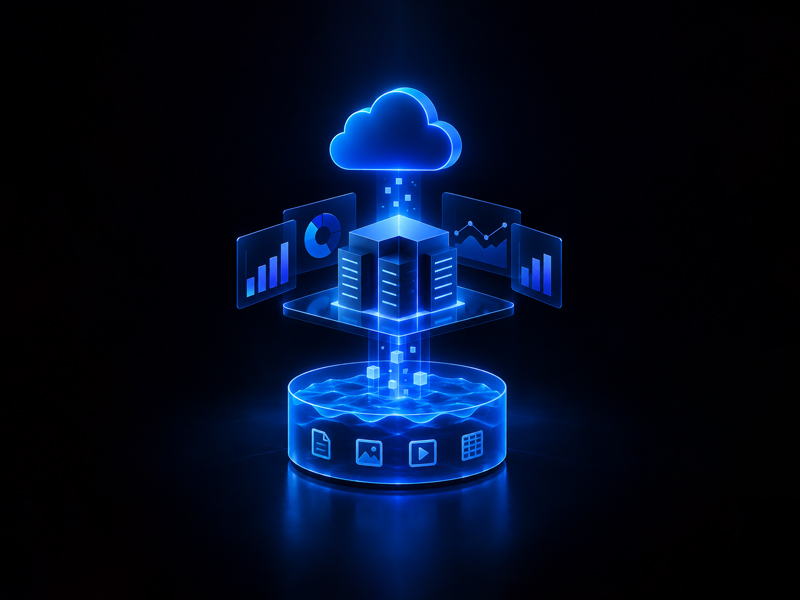
In a modern Snowflake Postgres architecture, transactional workloads stay close to the application while analytics and AI run on Snowflake at cloud scale. Application services connect to Snowflake Postgres for OLTP using standard PostgreSQL drivers and ORMs.
Through the pg_lake extension, Snowflake Postgres exposes data as Apache Iceberg tables in an S3-backed lakehouse. Snowflake queries these tables in place, applying unified governance, analytics, and AI capabilities via Cortex and Horizon. This architecture keeps Postgres optimized for low-latency operations while Snowflake handles large-scale analytics, BI, and AI workloads on the same governed data.
What does Snowflake Postgres deliver?
|
Capability |
What It Delivers |
|
Full Postgres compatibility |
100% community PostgreSQL compatibility with support for standard tools, clients and ORMs, enabling lift-and-shift migrations. |
|
High availability |
Automated replication designed to maintain resilience and uptime. |
|
10 days of continuous backups |
Included backups for precisrecovery from errors or failed deployments. |
|
In-place major version upgrades |
Seamless PostgreSQL upgrades without manual intervention. |
|
Competitive price-performance |
Cost-effective performance comparable to leading managed PostgreSQL services. |
|
Rapid forking |
Instantly create writable database copies from any point in time. |
|
Private connectivity |
Secure access through PrivateLink and VPC peering. |
|
Advanced security controls |
Support for customer-managed encryption keys. |
|
Monitoring |
Built-in performance metrics and query insights in Snowsight. |
|
Snowflake AI integration |
Native integration with Snowflake Cortex AI for intelligent applications. |
Key Benefits of Snowflake Postgres for Modern Enterprises
Reduced or Eliminated ETL Pipelines
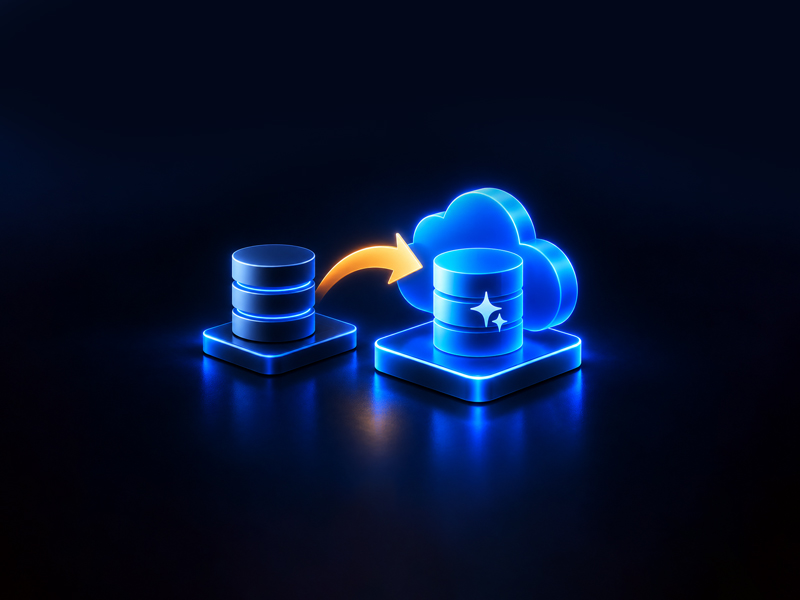
Traditional architectures depend on third-party ETL tools to replicate transactional data into analytics platforms. These pipelines cause latency and increase maintenance costs. Snowflake Postgres, combined with pg_lake, reduces or eliminates this dependency. Teams can move data into Snowflake natively and read or write open formats such as Apache Iceberg directly. This approach reduces data duplication and simplifies data operations.
Real-Time Operational Intelligence
In most environments, AI systems operate on replicated data that may be minutes or hours old. That delay limits the effectiveness of intelligent applications. With Snowflake Postgres, transactional data lives next to analytics and Snowflake Cortex. Applications and agents can operate on almost real-time operational context. This capability supports embedded analytics, dynamic personalization and responsive decision-making.
Seamless PostgreSQL Migration
Snowflake Postgres maintains full community PostgreSQL compatibility. Developers can continue using existing tooling and extensions. Applications that rely on pg_vector, PostGIS and common ORMs can migrate with minimal friction. This compatibility lowers migration risk and accelerates modernization initiatives.
Unified Spend and Governance
Enterprises often operate multiple managed PostgreSQL services and integration tools. This fragmentation increases cost and complicates governance. Snowflake Postgres allows organizations to consolidate transactional and analytical workloads under an existing Snowflake commitment. Security policies apply consistently across workloads, simplifying compliance and reducing vendor sprawl.
Enterprise-Ready PostgreSQL
Snowflake Postgres delivers high availability, automated failover and continuous backups with 10 days included. It supports in-place major version upgrades, private connectivity through PrivateLink or VPC peering and customer-managed encryption keys. Monitoring and observability integrate directly into Snowsight. Enterprises gain production-ready PostgreSQL operations without adding infrastructure complexity.
Enterprise Use Cases for Snowflake Postgres
1. Real-Time Fraud Detection
Use Case:
A financial services firm processes transactions in PostgreSQL and relies on analytics models to detect fraud. Traditionally, transaction data is replicated to a warehouse before evaluation.
Outcome:
With Snowflake Postgres, fraud models built with Snowflake analytics and Cortex AI evaluate transactions as they occur. Suspicious activity, such as rapid cross-border purchases or abnormal spending patterns, can trigger immediate alerts or automated transaction blocks, reducing financial exposure.
2. Dynamic Retail Personalization
Use Case:
An e-commerce platform stores orders, browsing behavior and inventory data in PostgreSQL. Recommendation engines depend on batch data transfers.
Outcome:
By running transactional and analytical workloads on the same platform, personalization engines can respond to live cart activity. For example, when a customer adds a product, the system can instantly suggest complementary items based on current inventory and behavior patterns.
3. SaaS Operational Intelligence
Use Case:
A SaaS provider tracks feature usage and system logs in PostgreSQL while analytics dashboards run on a separate platform.
Outcome:
With Snowflake Postgres, operational metrics feed directly into analytics dashboards. Product teams can detect anomalies, monitor adoption and respond to performance issues in near real time without maintaining complex ETL pipelines.
4. Unified Lakehouse Analytics
Use Case:
Product event streams are written once to Amazon S3 in Parquet format and exposed as Iceberg tables through the pg_lake extension. PostgreSQL acts as the transactional lakehouse engine, managing schemas and handling upserts. Snowflake can then query and govern these Iceberg tables directly for analytics, creating a unified open lakehouse architecture for product data without duplicating pipelines or storage layers.
Outcome:
Teams can eliminate copy-heavy ETL pipelines by querying Iceberg tables directly in place. This reduces storage and ingestion costs while keeping data fresher. At the same time, Snowflake adds warehouse-grade governance, performance, and AI/BI capabilities on top of the open Iceberg layer. The same product event tables can power dashboards, experimentation analysis, and machine learning features across multiple engines without vendor lock-in.
Accelerating Snowflake Postgres Modernization with KPI Partners
Adopting Snowflake Postgres requires careful architecture planning. Organizations must assess existing PostgreSQL estates, evaluate ETL dependencies and align governance frameworks.
KPI Partners helps enterprises design and execute this transition. KPI Partners teams conduct detailed workload assessments to identify opportunities for ETL rationalization and consolidation. The teams validate application compatibility and develop phased migration strategies that reduce operational risk and aligns security, role-based access controls and encryption standards within Snowflake’s governance model.
For AI-driven use cases, KPI Partners designs architectures that leverage Snowflake Cortex and almost real-time operational data.
Beyond migration, KPI Partners provides performance optimization and ongoing managed services to ensure workloads scale efficiently.