

by Kurt Wolff
It may be strange to be writing this with the intention of posting to a blog, but I thought someone should step back a...

by Kurt Wolff
It may be strange to be writing this with the intention of posting to a blog, but I thought someone should step back a minute and issue a few words of warning about information that can be found on the web about Oracle BI EE.
by Kurt Wolff
Suppose you have a series of datetime pairs in Oracle BI... The problem is to display the differences between DATE1 and...
by Kurt Wolff
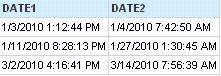
Suppose you have a series of datetime pairs in Oracle BI... The problem is to display the differences between DATE1 and DATE2 in days, hours, minutes, and seconds.

by Kurt Wolff
When you duplicate a table, you create a new physical table with a new name. If this table is involved in a query, the SQL...
by Kurt Wolff
When you duplicate a table, you create a new physical table with a new name. If this table is involved in a query, the SQL FROM clause will list this table. If the table does not exist in the database, then an error will occur.
Creating an alias creates a copy of the metadata table object that will be referenced in SQL with a new alias name. The alias name in SQL, as it is for all tables, will be derived its metadata ID.
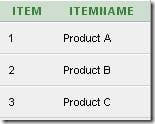
To see the table IDs in OBIEE metadata, use the Oracle BI Query Repository utility. Here are some physical tables (and aliases) in a repository that I’ve created. It’s the last five digits of the ID that will be used to create the table aliases in SQL.
by Kurt Wolff
Row level security (constraining a user’s view of the data to rows which meet pre-defined criteria) is a common requirement...
by Kurt Wolff
Row level security (constraining a user’s view of the data to rows which meet pre-defined criteria) is a common requirement in OBIEE. This post will explore this topic, using a simple schema with a single fact table and three dimension tables, built around the theme of retail sales.
by Kurt Wolff
Suppose you have a dashboard with three pages (tabs). Suppose further that not every user should see all three tabs. Most...
by Kurt Wolff
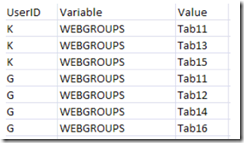
Suppose you have a dashboard with three pages (tabs). Suppose further that not every user should see all three tabs. Most users will see a limited set of the tabs – some will see two, some will see only one. You want to define web groups to cover all the possible combinations. How many web groups would you have to create?

by Kurt Wolff
If you have tried to develop dashboards or coherent sets of reports as an analytic application, you have had to think about...
by Kurt Wolff
If you have tried to develop dashboards or coherent sets of reports as an analytic application, you have had to think about how best to structure a web catalog.

by Kurt Wolff
An OBIEE dashboard designer recently asked how to turn a prompt for a single month into a filter for a range of months. For...
by Kurt Wolff
An OBIEE dashboard designer recently asked how to turn a prompt for a single month into a filter for a range of months. For example, if the user selects “Aug” in the prompt, the results should include not just August but also the three months preceding and following August (i.e. May through Nov).
by Kurt Wolff
Linear regression is a statistical technique for drawing a line through a set of data points that “best fits” the data. It...
by Kurt Wolff
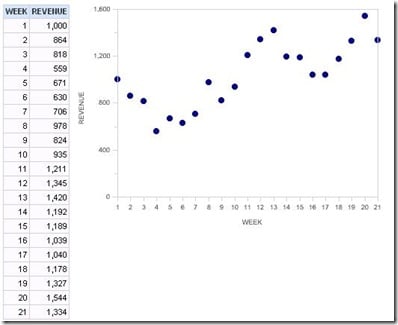
Linear regression is a statistical technique for drawing a line through a set of data points that “best fits” the data. It is a useful and standard technique for quantifying trends.
by Kurt Wolff
One of the questions that comes up over and over again is how to show all periods in a query when facts don’t exist for all...
by Kurt Wolff
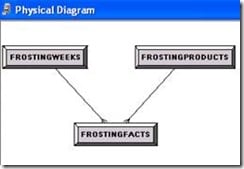
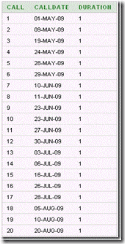
One of the questions that comes up over and over again is how to show all periods in a query when facts don’t exist for all periods or how to show all products when facts don’t exist for all products.
by Kurt Wolff
[Note: the following discussion is based on OBIEE version 10.1.3.4.0 and Oracle XE version 10G, both running on Windows. The...
by Kurt Wolff
[Note: the following discussion is based on OBIEE version 10.1.3.4.0 and Oracle XE version 10G, both running on Windows. The behavior of other versions of OBIEE could be different.]


by Kurt Wolff
It may be strange to be writing this with the intention of posting to a blog, but I thought someone should step back a minute and issue a few words of warning about information that can be found on the web about Oracle BI EE.
by Kurt Wolff
Suppose you have a series of datetime pairs in Oracle BI... The problem is to display the differences between DATE1 and DATE2 in days, hours, minutes, and seconds.
by Kurt Wolff
When you duplicate a table, you create a new physical table with a new name. If this table is involved in a query, the SQL FROM clause will list this table. If the table does not exist in the database, then an error will occur.
Creating an alias creates a copy of the metadata table object that will be referenced in SQL with a new alias name. The alias name in SQL, as it is for all tables, will be derived its metadata ID.
To see the table IDs in OBIEE metadata, use the Oracle BI Query Repository utility. Here are some physical tables (and aliases) in a repository that I’ve created. It’s the last five digits of the ID that will be used to create the table aliases in SQL.
by Kurt Wolff
Row level security (constraining a user’s view of the data to rows which meet pre-defined criteria) is a common requirement in OBIEE. This post will explore this topic, using a simple schema with a single fact table and three dimension tables, built around the theme of retail sales.
by Kurt Wolff
Suppose you have a dashboard with three pages (tabs). Suppose further that not every user should see all three tabs. Most users will see a limited set of the tabs – some will see two, some will see only one. You want to define web groups to cover all the possible combinations. How many web groups would you have to create?
by Kurt Wolff
If you have tried to develop dashboards or coherent sets of reports as an analytic application, you have had to think about how best to structure a web catalog.
by Kurt Wolff
An OBIEE dashboard designer recently asked how to turn a prompt for a single month into a filter for a range of months. For example, if the user selects “Aug” in the prompt, the results should include not just August but also the three months preceding and following August (i.e. May through Nov).
by Kurt Wolff
Linear regression is a statistical technique for drawing a line through a set of data points that “best fits” the data. It is a useful and standard technique for quantifying trends.
by Kurt Wolff
One of the questions that comes up over and over again is how to show all periods in a query when facts don’t exist for all periods or how to show all products when facts don’t exist for all products.
by Kurt Wolff
[Note: the following discussion is based on OBIEE version 10.1.3.4.0 and Oracle XE version 10G, both running on Windows. The behavior of other versions of OBIEE could be different.]
