KPI Partners Blog

Creating an Alias vs. Duplicating a Physical Table (SQL & OBIEE)

Posted by KPI Partners News Team on Thu, May 31, 2012 @ 09:17 PM

by Kurt Wolff

When you duplicate a table, you create a new physical table with a new name. If this table is involved in a query, the SQL FROM clause will list this table. If the table does not exist in the database, then an error will occur.

Creating an alias creates a copy of the metadata table object that will be referenced in SQL with a new alias name. The alias name in SQL, as it is for all tables, will be derived its metadata ID.

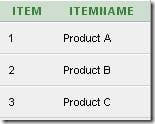
To see the table IDs in OBIEE metadata, use the Oracle BI Query Repository utility. Here are some physical tables (and aliases) in a repository that I’ve created. It’s the last five digits of the ID that will be used to create the table aliases in SQL.
Read More

Tags: Data Warehousing, Kurt Wolff, Blog

Complex Row Level Security in Oracle BI (OBIEE)

Posted by KPI Partners News Team on Thu, May 17, 2012 @ 07:58 PM

by Kurt Wolff

Row level security (constraining a user’s view of the data to rows which meet pre-defined criteria) is a common requirement in OBIEE. This post will explore this topic, using a simple schema with a single fact table and three dimension tables, built around the theme of retail sales.

Read More

Tags: Kurt Wolff, Oracle BI, Blog

Defining and Assigning Web Group Variables in OBIEE

Posted by KPI Partners News Team on Thu, May 03, 2012 @ 09:05 PM

by Kurt Wolff

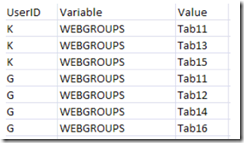
Suppose you have a dashboard with three pages (tabs). Suppose further that not every user should see all three tabs. Most users will see a limited set of the tabs – some will see two, some will see only one. You want to define web groups to cover all the possible combinations. How many web groups would you have to create?

Read More

Tags: Kurt Wolff, Oracle BI, Blog

Video >> A Fun Look At The History Of Business Intelligence

Posted by KPI Partners News Team on Wed, May 02, 2012 @ 04:21 PM

What is Business Intelligence? Listen to a brief history of BI, where we've been, where we are now, and where we are going...

Read More

Tags: Data Warehousing, Business Intelligence, Blog